Las Directrices de la CDPD de la ONU sobre Interseccionalidad acaban de cambiar las reglas del juego para los derechos de las personas con discapacidad: Esto es lo que necesitas saber 

¡Grandes noticias para las mujeres con discapacidad y para todas las personas defensoras, aliadas y organizaciones feministas y con discapacidad en todo el mundo! 

Durante su 35º Período de Sesiones en agosto de 2026, el Comité de las Naciones Unidas sobre los Derechos de las Personas con Discapacidad (CDPD de la ONU) adoptó oficialmente las Directrices sobre la Identificación y Abordaje de la Discriminación Interseccional Contra las Niñas, Adolescentes, Mujeres y Mujeres Mayores con Discapacidad. 

Este hito representa un paso gigante para los derechos de las personas con discapacidad. Por primera vez, los Estados Partes cuentan con orientación explícita y accionable para respaldar sus obligaciones en la intersección entre género y discapacidad. 

👉 Lee las Directrices oficiales de la CDPD de la ONU aquí 

¿Qué son las Directrices de la CDPD sobre Discriminación Interseccional? 

Las Directrices constituyen un marco internacional autorizado, desarrollado por la CDPD de la ONU, para ayudar a los Estados a prevenir, supervisar y abordar de mejor manera la discriminación interseccional. 

A lo largo de años de procesos de revisión de países por parte de la CDPD de la ONU, el Comité identificó una brecha persistente y crítica: los derechos humanos específicos de las mujeres con discapacidad y la discriminación interseccional y compleja que experimentan, rara vez son comprendidas o abordadas por los gobiernos. 

Al celebrar el 20º aniversario de la CDPD de la ONU, estas Directrices fueron emitidas para cerrar esa brecha, garantizando que la convención se aplique a favor de todas las mujeres y niñas con discapacidad, y las personas de género diverso con discapacidad a lo largo de sus vidas. 

¿Por qué estas Directrices cambian las reglas del juego? 

Los documentos internacionales rara vez se centran de forma explícita en las experiencias de vida y los derechos de las mujeres con discapacidad. Estas Directrices nombran y explican las barreras sistémicas que las mujeres y personas de género diverso con discapacidad enfrentan a diario en todo el mundo, incluyendo: 

  • Salud y Derechos Sexuales y Reproductivos (SDSR): Abordar y prevenir la esterilización forzada, la anticoncepción forzada, la falta de atención médica accesible, las restricciones al aborto y la falta de atención perinatal, menstrual y menopáusica. 
  • Violencia de Género y Basada en la Discapacidad: Exponer la violencia institucional, el abuso digital/en línea y la falta generalizada de servicios de apoyo para las víctimas. 
  • Reconocimiento de las labores de cuidado: Validar a las mujeres con discapacidad como cuidadoras activas y madres, en lugar de tratarlas únicamente como receptoras de cuidados. 
  • Exclusión económica y educativa: Destacar las barreras en el mercado laboral y la exclusión de la educación durante la pubertad. 
  • Respuesta a crisis y cambio climático: Combatir la exclusión agravada durante desastres ambientales, emergencias climáticas y esfuerzos de ayuda humanitaria. 

Por nombrar sólo algunas. 

7 avances clave en el enfoque de las Directrices 

Lo que hace que este documento sea un instrumento transformador único es su enfoque estructural y progresista: 

  1. Inclusión explícita de la diversidad de género: Las Directrices abarcan explícitamente los derechos de las personas transgénero, intersexuales, no binarias y de otras diversidades de género con discapacidad, y solicitan una interpretación inclusiva de la diversidad de género de todas las obligaciones descritas. 
  2. Reconocimiento de las raíces históricas: El Comité aborda explícitamente el legado y los impactos continuos del colonialismo y la esclavización, estableciendo que los Estados que se benefician de estos sistemas históricos tienen la responsabilidad particular de reparar sus efectos actuales. 
  3. Un catálogo abierto de diversidad: El texto reconoce que las mujeres con discapacidad pertenecen a comunidades multimarginalizadas —incluidos grupos indígenas, afrodescendientes/negros, dalit, adivasi, refugiados, solicitantes de asilo, minorías religiosas, pastoriles o personas que viven en asentamientos informales, entre otros— dejando espacio para todas las identidades interseccionales. 
  4. Enfoque estructural y preventivo: Yendo más allá de un modelo estrictamente punitivo y reactivo, las Directrices exigen el desmantelamiento de la opresión sistémica (como el capacitismo, el audismo, el racismo y el patriarcado) mediante la intervención temprana, la educación y la reforma de las políticas públicas. 
  5. El aborto, la orientación sexual, la identidad de género también son un asunto de discapacidad: Las directrices reconocen los impactos de la penalización del aborto,la homosexualidad, la identidad y expresión de género, así como las restricciones al matrimonio o a las relaciones consensuadas, como un tema crucial de derechos de discapacidad e interseccionalidad. 
  6. Rendición de cuentas para plataformas digitales: Pide cooperación internacional y regional sobre la regulación basada en derechos humanos de las plataformas digitales y sistemas de inteligencia artificial (IA) para abordar la violencia facilitada por la tecnología, el sesgo algorítmico y la discriminación contra las mujeres con discapacidad. 
  7. Rendición de cuentas y presupuesto: El documento enfatiza que los derechos no pueden existir sin recursos, exigiendo un cambio en el gasto público: alejándolo de la militarización y el encarcelamiento, y moviéndolo hacia la inclusión social y los derechos interseccionales. 

…y mucho más. 

Cómo contribuyó Women Enabled International (WEI) a las Directrices 

En Women Enabled International (WEI), trabajamos de cerca con la CDPD en cada etapa de desarrollo para garantizar que las Directrices estuvieran fundamentadas en las realidades y experiencias de vida de personas con discapacidad multimarginalizadas. 

Nuestros esfuerzos se centraron en 3 objetivos principales: 

  1. Construcción de movimiento y consultas significativas

  • Participación de la comunidad: Organizamos un seminario web global en agosto de 2025 con integrantes del Grupo de Trabajo de la CDPD (reuniendo a casi 300 participantes) y publicamos materiales de preguntas y respuestas accesibles para guiar los aportes públicos. 
  • Cofacilitación de consultas: Cofacilitamos consultas presenciales de la CDPD durante la CoSP (Conferencia de los Estados Partes) en 2026, centrando a organizaciones dirigidas por mujeres con discapacidad, incluidas mujeres sordas, defensoras de comunidades pastoriles y lideresas de justicia racial. 
  • Amplificación de autodefensoras: Nos asociamos con Inclusion International para organizar consultas dedicadas con mujeres con discapacidad intelectual, asegurando que las contribuciones en lenguaje sencillo y accesible se incluyeran en ambas rondas de revisión. 
  1. Comunicación estratégica e incidencia especializada

  • Propuestas conjuntas del movimiento: En 2025, WEI convocó a una amplia red de organizaciones —incluidas Advocacy for Women with Disabilities Initiative–Nigeria, Asia Pacific Indigenous Women with Disabilities Network, Disabled Women in Africa, Disability Rights Fund, Diverse Empowerment Foundation, Humanity & Inclusion, National Indigenous Disabled Women Association-Nepal, Rising Flame, Sruti Disability Rights Centre-India, Transforming Communities for Inclusion, Triumph Mental Health Support, Validity Foundation-Mental Disability Advocacy Centre, Women Enabled International, Women Spaces Africa, Dra. Magda(lena) Szarota, Nelly Bassily, Pamela Molina y Clare Gibellini— para presentar recomendaciones detalladas sobre participación política, SDSR y justicia climática. 
  • Fortalecimiento de las obligaciones del Estado: En 2026, recopilamos comentarios de aliados de Vidas Negras com Deficiência Importam, Sruti Disability Rights Center, National Indigenous Disabled Women Association Nepal (NIDWAN), Asia Pacific Indigenous Women With Disabilities Network, Center for Inclusive Policy (CIP), TRIUMPH Mental Health y Rising Flame para fortalecer el Capítulo III del borrador, centrándonos en la viabilidad, el seguimiento y los presupuestos con perspectiva de género. 
  • Apoyo de capacidades: Apoyamos directamente a organizaciones aliadas en Brasil, India, Uganda, Kenia y Nepal para redactar análisis independientes que abordaran las intersecciones locales de casta, entornos rurales, derechos indígenas, justicia racial y diversidad sexual y de género. 
  1. Asesoría técnica y compromiso de alto Nivel

  • WEI fue invitada a formar parte del grupo de expertos técnicos que apoyó al Comité del CDPD analizando las contribuciones públicas y perfeccionando el texto final. 
  • Coorganizamos eventos paralelos en la CoSP 18 y CoSP 19 junto con el Comité del CDPD y las Misiones Permanentes de Uruguay, Costa Rica, España y Brasil para generar impulso político entre representantes estatales. 

Cómo usar las directrices de la CDPD de la ONU en tu trabajo de incidencia 

A pesar de que las Directrices no son vinculantes, ofrecen un punto de referencia internacional sin precedentes para la incidencia en derechos humanos y la reforma de políticas públicas. Así es como los diferentes actores pueden aprovecharlas: 

  • Organizaciones de Personas con Discapacidad (OPD) y colectivos feministas: Usen este documento internacional como herramienta de presión al exigir reformas políticas a gobiernos locales y nacionales, como atención médica inclusiva, reforma de la capacidad jurídica y apoyo accesible contra la violencia de género. 
  • Actores estatales y puntos focales: Los ministerios nacionales, instituciones de derechos humanos y organismos de coordinación del CDPD pueden usar el texto como una hoja de ruta práctica para diseñar, financiar y monitorear programas públicos no discriminatorios. 
  • Informes para la ONU y revisiones paralelas: Hagan referencia a obligaciones específicas de las Directrices al presentar informes sombra durante las revisiones de los Estados ante el CDPD, con el fin de exigir cuentas a los gobiernos en materia de respuesta a emergencias climáticas o derechos reproductivos. 

¿Qué sigue?  

La adopción de estas Directrices es una victoria tras años de organización colectiva por parte de mujeres con discapacidad, defensoras de la diversidad de género y alianzas interseccionales en todo el mundo. 

Ahora empieza el verdadero trabajo: convertir estas directrices en experiencias reales. 

Sigue en contacto con Women Enabled International mientras publicamos herramientas, análisis y materiales de difusión para ayudarte a poner estas Directrices en práctica en tu comunidad. 

👉 Lee las Directrices oficiales de la CDPD de la ONU aquí 

¿Te pareció útil este resumen? 

¡Comparte este artículo para difundir la noticia sobre las nuevas Directrices de la CDPD de la ONU o etiquétanos en redes sociales como @womenenabled para contarnos cómo planea usarlas tu organización! 

Únete al Newsletter de WEI


How can a “broken” body cross the world? 

(My experience participating in Women Deliver 2026)
By Gianna Agostina Mastrolinardo 

ENG. Image of Gianna Mastrolinardo, a disabled women and disability advocate from Argentina. She is wearing a white shirt with black stripes, has curly long hair and is sitting on an automatic wheelchair.

(SCROLL DOWN FOR ORIGINAL TEXT IN SPANISH)

 For me, as woman with a disability, participating in the last edition of Women Deliver in Melbourne, Australia wasn’t simply about attending a conference. This was an intense and transformative experience that tested my own limits, and it also meant that me and my body had to navigate structural barriers that restrict the participation of young women with disabilities in global events such as this one.  

 One full day of traveling, three flights, more than 12,000 kilometers of flying. Never having traveled so far, the magnitude of the event, and not speaking English that fluently all could have been reason enough to justify saying no to this opportunity. However, I decided to say yes. Even though I was afraid, I said yes with the conviction that we must occupy those spaces, because our presence transforms them.  


My desire to cross the world and be part of what was happening in Naarm was not enough for me to stop thinking of it as something impossible. Support and collective effort were crucial to stripping that last word of the prefix that imprisons dreams. And now that I think of this experience again, an inescapable feeling comes to me: the relief of knowing I don’t have to think about disability in isolation.  


 I am a Latin American “lisiada” cripple from Córdoba, Argentina, I am 23 years old and I live my daily life fighting for the effective realization of the rights of people with disabilities with the certainty that every roll of my wheels is possible because there are many people who work with me, who accompany me, who care for me and who even believe and trust in me when I simply cannot.   

ENG. Women Deliver 2026 women with disabilities meet-up. A diverse group of women with different disabilities are standing and holding signs about Disability Rights and Disability Justice on Women Deliver's 2026 venue.

WEI not only generously approached me with this opportunity. They also worked with Women Deliver so that this experience did not become only about managing how to overcome barriers, but rather, that it could be about enjoyment, learning, and the wonderful opportunity to find each other regardless of our languages or the physical distances between the places we come from. 


ENG. Gianna, an Argentinian disabled woman and disability advocate is sitting down and holding a sign that says "Disabled woman - we are changing the (latinas) narrative". She is smiling and looking down. Without a doubt, this experience was challenging. However, the availability of support, the design of dialogue spaces, and the warmth that was present throughout the process reaffirmed my belief that there is something extremely political about spaces having to take steps to ensure accessibility. When facing barriers stops being an individual issue and instead creating ways in which everyone can participate becomes a collective responsibility, the world we dream of achieving becomes a reality.  


To be in Melbourne was to live for a few days in that world. I had never before experienced such an accessible city. Sidewalks, ramps, public transport, and a quality of life I thought existed only in my fantasies. I did not have to worry about managing how to move with my wheelchair or  do research ahead of time to make sure there were accessible bathrooms. Where I live, I cannot use public transportation because even when we manage to find accessible transport, getting to the bus stop is impossible. But in Australia, I even saw accommodations that I had never imagined (like a button that opens heavy doors! I definitely need that in my life). Having so many resources translates into immeasurable freedom, and I am aware that experiencing them was a great privilege.  


The political support from my organization: La Mesa de Trabajo en Discapacidad y Derechos Humanos was another essential element to making this possible, because they accompanied me during the trip and in everything that came before it. They were there every step of the way; they helped me to practice my English and to gauge the implications of a convening of this nature, to understand the discussions, and to consider my own contributions. This helped me feel a sense of security and confidence. My colleague Bri put her body in every part of the process with me. She was there not only during the trip, but also when, out of nowhere, I was asked to take medical exams for my visa. She was there when we discovered that my wheelchair couldn’t come with me due to airline restrictions and when—during the trip— the wheelchair I did travel with broke. She listened to me and offered me her words and physical and emotional support when I felt nervous, anxious, or frustrated. Together, we built a support system that, without a doubt, was truly a learning experience of trial and error, for which we needed a lot of patience. Having Bri as a travel companion, friend and support person was invaluable.  

I tell you all of this because what separates young women with disabilities from these events is not the physical space. We need more action,  more conversations, more time, more support, and more resources to be able to participate.  


 Our bodies are filled with so many other questions. I asked myself, for example, if my body could endure such a long trip, how would I manage to use the restroom during the flight, how would I travel through an unknown city, and how would my hotel bathroom be. This experience asked me to develop countless strategies that, thanks to both luck and intentional decision-making, were collectively created. This collective process was like a respite that allowed us to navigate each step of this journey. 


ENG. Gianna Mastrolinardo, an Argentinian disabled woman and disability advocate is speaking through a megaphone and holding her cellphone. She is sitting on her wheelchair. A group of disabled women is near her, some are standing and some are also using wheelchairs. She and others are wearing a t-shirt that reads "My existence is resistance." The great work of both organizations, Women Deliver and Women Enabled International, to guarantee the participation of people with disabilities in the event is a concrete response to the push to think about disability as a cross-cutting issue within feminism. It is not only about just adding a subject to a conference or to just having disabled people in attendance, but rather, it is about our effective participation in these spaces. This experience demonstrates that when accessibility is considered to be a key pillar when planning events, our participation is guaranteed and everything becomes more meaningful and rewarding. 

 The participation of young women with disabilities is key to influencing global agendas, building networks, and combatting preconceived ideas—yet today, the barriers we face to making this possible are numerous.


It is not only about physical accessibility in spaces, although this is still a key concern in many cases; it is also about the ways in which discussions are structured, who is considered aseligible” to participate, who is able to comprehend and engage with the debates. Many times, these spaces are filled with technical language, dynamics, and ways of speaking that are exclusionary.  

To change these inequalities in participation, anti-ableism must be inseparable from feminism, and that will only happen when everyone understands that our fight is interconnected. Both the feminism and the disability movements share the same concern for a life in community, for care, for the building of more just societies. We must stop fragmenting our demands and fights, because that is the only way we will have more opportunities to advocate for the effective realization of human rights and to move towards more just societies.  


Coming back from Melbourne leaves us with the feeling that another world is possible. To find each other and to experience, at least for a couple days, how a life with less violence can be, to have the opportunity to dedicate time to think of strategies to change everything, has filled me with hope to continue working with others to build a feminist and anti-ableist Latin America. 


¿Cómo un cuerpo roto cruza el mundo?  

(Mi experiencia participando en Women Deliver 2026)
Por Gianna Agostina Mastrolinardo 

ESP.Imagen de Gianna Mastrolinardo, una mujer con discapacidad y activista por los derechos de las personas con discapacidad, oriunda de Argentina. Lleva una camisa blanca con rayas negras, tiene el cabello largo y rizado, y está sentada en una silla de ruedas eléctrica.

Para mí, participar de esta edición de Women Deliver en Melbourne, Australia no fue simplemente asistir a una conferencia. Fue una experiencia intensa y transformadora que puso en tensión mis propios límites y significó atravesar las barreras estructurales que hoy condicionan la participación de las mujeres jóvenes con discapacidad como yo en eventos globales como este. 


Un día de viaje, tres vuelos, más de doce mil kilómetros volando. Nunca haber viajado tan lejos, la magnitud del evento y no manejar el inglés con fluidez podrían haber sido elementos suficientes para justificar mi ausencia en esta oportunidad. Sin embargo, dije que sí, aun con miedo, desde la convicción de que hay que habitar estos espacios, porque nuestra presencia los transforma. 


Mi deseo de cruzar el mundo para formar parte de los acontecimientos en Naarm no era suficiente para dejar de pensarlo como algo imposible. Lo crucial para despojar a esta última palabra de ese prefijo que aprisiona los sueños fue el apoyo y el trabajo colectivo. 

Sucede que, al volver a narrar mi experiencia aparece una sensación que me resulta ineludible: el alivio de no tener que pensar la discapacidad en soledad. 


Soy una lisiada latinoamericana de Córdoba, Argentina, tengo 23 años y vivo la cotidianeidad desde la lucha por la realización efectiva de los derechos de las personas con discapacidad con la certeza de que cada giro en mis ruedas es posible porque hay otres conmigo que trabajan, me acompañan y me cuidan e incluso creen y confían en mí aun cuando yo dudo. 

ESP. Encuentro de mujeres con discapacidad en Women Deliver 2026. Un grupo diverso de mujeres con distintas discapacidades aparece de pie, sosteniendo carteles sobre los derechos de las personas con discapacidad y la justicia para las personas con discapacidad en el lugar de celebración de Women Deliver 2026.  

WEI no solo me acercó generosamente esta oportunidad sino que trabajó junto a Women Deliver para que esta experiencia no estuviera marcada por tener que gestionar como cruzar barreras, sino por el disfrute, el aprendizaje y lo maravilloso de encontrarnos sin importar nuestros idiomas o las distancias de nuestros lugares de procedencia.  

ESP. Gianna, una mujer argentina con discapacidad y defensora de los derechos de las personas con discapacidad, está sentada sosteniendo un cartel que dice: «Discas: estamos cambiando la narrativa (de las latinas)». Está sonriendo y mirando hacia abajo. Sin lugar a dudas, esta experiencia fue desafiante, sin embargo, la disponibilidad de apoyos, la creación de espacios de diálogo y la calidez que marcó este proceso me hizo reafirmar una vez más que hay algo profundamente político en que los espacios se ocupen de garantizar la accesibilidad. Cuando enfrentar barreras deja de ser una preocupación individual e inventar maneras para que todes puedan participar se convierte en una responsabilidad colectiva, se hacen realidad los mundos que soñamos conquistar.  


Estar en Melbourne fue vivir unos días en esos mundos. Jamás había experimentado una ciudad tan accesible. Veredas, rampas, transporte público y una calidad de vida que creí que solo habitaba en mis fantasías. No tuve que preocuparme por gestionar como  trasladarme con mi silla de ruedas, ni hacer una investigación previa para asegurarme de que hubiese baño accesible. En donde yo vivo no puedo usar el transporte público porque aun cuando identificamos uno accesible, llegar hasta la parada es imposible. En cambio en Australia, incluso conocí formas de accesibilidad que ni siquiera había podido imaginar (¡Como un botón que abre puertas pesadas! Necesito eso en mi vida). Gozar de tantos recursos, se traduce en una libertad incalculable, que soy consciente de que fue un gran privilegio haber podido experimentar.  


El apoyo político de mi organización, La Mesa de Trabajo en Discapacidad y Derechos Humanos, fue otro de los elementos indispensables para hacer esto posible, porque me acompañaron en el viaje y también en todo lo que sucedió antes. Estuvieron en cada paso de la gestión, me ayudaron a practicar inglés y a dimensionar las implicaciones de un encuentro de estas características, a comprender las discusiones, a pensar mis aportes, brindándome seguridad y confianza. Mi compañera Bri, puso el cuerpo conmigo en cada parte del proceso. Estuvo ahí no sólo en el viaje, sino cuando, inexplicablemente, me pidieron hacerme exámenes médicos para la visa. Estuvo ahí cuando descubrimos que mi silla no podía viajar por protocolos de la aerolínea o cuando en pleno viaje se rompió la silla que llevaba. Me escuchó y me brindó su palabra y abrazo cuando me sentía nerviosa, ansiosa o frustrada. Fuimos construyendo juntas el apoyo que me brindó y eso sin dudas es una instancia de mucho aprendizaje, de prueba y error, para la que se necesita paciencia. Sin dudas tener a Bri, como amiga, compañera y persona de apoyo fue invaluable.  


Les cuento todo esto porque la distancia que nos separa a las mujeres jóvenes con discapacidad de eventos como éste no es sólo espacial. Nosotras, necesitamos más gestiones, más conversaciones, más tiempo, más acompañamiento y más recursos para poder participar.  


Nuestros cuerpos atraviesan otras preguntas. Yo me pregunté por ejemplo si mi cuerpo aguantaría un viaje tan largo, cómo haría para ir al baño en el avión, cómo haría para trasladarme en una ciudad desconocida, cómo sería el baño del hotel. Esta experiencia me implicó, elaborar un sin fin de estrategias que por fortuna y por decisión política, fueron creadas colectivamente. Mi descripción sería que se gestó un gran lugar de descanso para atravesar cada una de las instancias de este viaje. 


ESP.Gianna Mastrolinardo, una mujer argentina con discapacidad y defensora de los derechos de las personas con discapacidad, habla a través de un megáfono mientras sostiene su teléfono móvil. Está sentada en su silla de ruedas. Cerca de ella se encuentra un grupo de mujeres con discapacidad; algunas están de pie y otras también utilizan sillas de ruedas. Ella y otras portan una playera que lee "Mi existencia es resistencia". El gran trabajo de Women Deliver junto a Women Enabled International para garantizar la participación de personas con discapacidad en la conferencia es una respuesta concreta a la apuesta por pensar a la discapacidad como un tema transversal dentro de los feminismos. No se trata de simplemente agregar un tema a la agenda de la conferencia, ni de que las personas con discapacidad simplemente estén, sino de que puedan participar de manera efectiva. Esta experiencia es una nueva demostración de que cuando se toman decisiones que contemplan a la accesibilidad como un aspecto constitutivo de todo el evento, la participación se garantiza y todo se vuelve más enriquecedor. 

La participación de mujeres jóvenes con discapacidad es clave para incidir en agendas globales, construir redes y disputar sentidos, pero hoy las barreras que enfrentamos para que esto sea posible son múltiples.


No se trata sólo de la accesibilidad física a los espacios, aunque en muchas ocasiones, ésta sigue siendo una deuda central, también se trata de los modos en los que se construyen las discusiones, quienes están legitimados a participar, quienes pueden comprender y apropiarse de esos debates. Muchas veces esos espacios están atravesados por lenguajes técnicos, dinámicas y formas de decir que son excluyentes. 

Para cambiar esas desigualdades en la participación, el anticapacitismo debe volverse inseparable de los feminismos, y eso sólo sucederá cuando se comprenda que nuestra lucha está unida. Tanto el feminismo como el movimiento de personas con discapacidad comparten una preocupación por la vida en comunidad, por los cuidados, por la construcción de sociedades más justas. Tenemos que dejar de sectorizar las demandas y fragmentar las luchas, sólo así tendremos mayores posibilidades de incidencia para lograr la conquista efectiva de los derechos humanos y avanzar hacia sociedades más justas.   

Volver de Melbourne nos deja la experiencia en el cuerpo de que otro mundo es posible. Encontrarnos y experimentar al menos unos días, como puede ser una vida con menos violencias, tener la posibilidad de dedicar tiempo a pensar estrategias para cambiarlo todo, me llenó de esperanza para continuar tejiendo con otras una Latinoamérica feminista y anticapacitista. 


A table of our own: Conectivas’ First Time in CADF.     


For many years, we have seen organizations that provide services for people with disabilities occupy spaces like the Central American Donors Forum (CADF). This year, thanks to WEI’s support, we were able to attend in person, make our voices heard, and become visible in places where we are usually invisible.  

We were not there to hear people speak about us; we went there to speak for ourselves, for the first time and in first person as an organization led by women with disabilities.  

What did we achieve?   

    • We facilitated a networking table on women and disability. 
    • We offered support to WEI’s lighting talk on women with disabilities fighting anti-rights movements.  
    • We networked with different actors about how we see–from a human rights perspective-the global backlash against rights and how we want to be included in the resistance. 

They still see us as something apart.   

Most of the donors we engaged in conversations with agreed that the disability movement needs funding, but struggled to see how to include us into what they are already doing. Disability intersects democracy, protection, and gender equality. Yes, we need specific resources, but we also need to be included in actions already being implemented.  

Our accessibility is not enough. We were able to participate thanks to WEI’s support, but many other women are missing from the conversation. Arriving is not enough: we need conditions to remain in those spaces. To guarantee accessibility for women with disabilities the following are also needed:  

    • Centering rest, 
    • physical and menstrual hygiene accommodations, 
    •  Low sensory rooms 

To invest in the participation of female disabled leaders is to invest in the movements: it strengthens the local networks that already exist to access resources, but also to weave alliances that survive the forum’s duration.  

Thank you to Women Enabled International for the technical assistance provided, which opened up a space for us without occupying it. This time we had a table of our own: what comes next is that this stops being the exception. 

In solidarity,   

Conectivas · October 2026.  


Una mesa propia: Conectivas por primera vez en CADF   


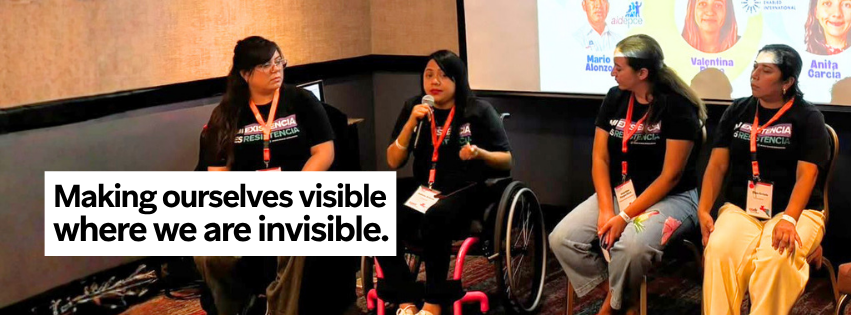
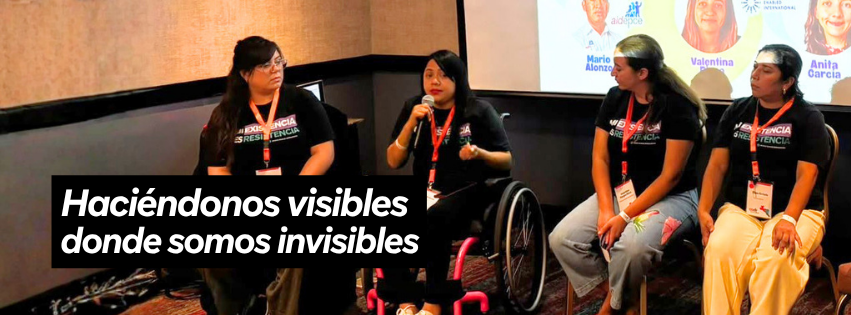
Por muchos años hemos visto cómo organizaciones que prestan servicios a personas con discapacidad ocupan espacios como el Foro Centroamericano de Donantes (CADF) y este año gracias al apoyo de WEI pudimos estar en persona, poner nuestra propia voz y hacernos visibles donde solemos ser invisibles.   

No fuimos a que hablaran de nosotras; fuimos a hablar, por primera vez y en primera persona, como organización representativa de mujeres con discapacidad   

¿Qué logramos?   

  • Facilitamos una mesa de networking sobre mujeres y discapacidad    
  • Apoyamos la charla relámpago de WEI sobre mujeres con discapacidad frente a movimientos antiderechos.   
  • Conversamos con distintos actores sobre cómo vemos, desde los derechos humanos, los retrocesos que estamos viviendo, y también sobre cómo queremos incluirnos.   

Nos siguen viendo como un punto a parte.   

La mayoría de donantes con quienes conversamos dicen que necesitarían recursos específicos para discapacidad, pero no ven cómo incluirnos en lo que ya hacen. La discapacidad atraviesa la democracia, la protección y la igualdad de género. Sí, necesitamos recursos específicos y, a la vez, inclusión en las acciones que ya existen.    

Nuestra accesibilidad no es suficiente. Nosotras pudimos llegar gracias al apoyo de WEI, pero faltan muchas otras, y llegar no basta; necesitamos condiciones para quedarnos. Para garantizar la accesibilidad de mujeres con discapacidad también son necesarios espacios para:   

  • Descansar   
  • Higiene corporal y menstrual   
  • Aislamiento del ruido y de la multitud,    

Invertir en la participación de líderes feministas con discapacidad es invertir en movimientos: fortalece las redes locales que ya existen, tanto para acceder a recursos como para tejer alianzas que duren más que el foro.   

Gracias a WEI por una asistencia técnica que nos abrió espacio sin ocupar nuestro lugar. Esta vez tuvimos una mesa propia; lo que sigue es que deje de ser la excepción.   

En solidaridad,   

Conectivas · octubre de 2026   


A salmon-pink background featuring a faded United Nations logo. Large, bold text in black and white boxes reads: "ACCESSIBILITY isn’t a 'luxury' IS A FUNDAMENTAL HUMAN RIGHT." The logo for "Women Enabled International" is at the bottom.
A salmon-pink background featuring a faded United Nations logo. Large, bold text in black and white boxes reads: “ACCESSIBILITY isn’t a ‘luxury’ IS A FUNDAMENTAL HUMAN RIGHT.” The logo for “Women Enabled International” is at the bottom.

ENGLISH

We have been anxiously waiting for the CRPD Committee to confirm its next meeting in March 2026 (34th Session). Now we know why they’ve been delayed: The people with disabilities on the Committee can’t get the UN to commit to accessibility.

When the UN started cutting its budget, we feared disability rights would become an easy target. Unfortunately, we were right.

If the UN can’t ensure basic accessibility for its own experts, how can we expect any State to do it for their people?

Read the CRPD Committee statement and demand that the UN prioritizes inclusion, not budget cuts: https://lnkd.in/eYWPMFzh


Fondo color salmón con el logo de las Naciones Unidas difuminado. El texto en bloques blancos y negros dice: "LA ACCESIBILIDAD no es un 'lujo' ES UN DERECHO FUNDAMENTAL." Incluye el logo de "Women Enabled International".
Fondo color salmón con el logo de las Naciones Unidas difuminado. El texto en bloques blancos y negros dice: “LA ACCESIBILIDAD no es un ‘lujo’ ES UN DERECHO FUNDAMENTAL.” Incluye el logo de “Women Enabled International”.

ESPAÑOL
Hemos estado esperando con ansiedad que el Comité CRPD confirme su próxima reunión de marzo 2026 (Sesión N.34). Ahora sabemos el motivo del retraso: las personas con discapacidad que integran el Comité no logran que la ONU se comprometa con la accesibilidad.

Cuando la ONU comenzó a recortar su presupuesto, temíamos que los derechos de las personas con discapacidad se convirtieran en un blanco fácil. Lamentablemente, teníamos razón.

Si la ONU no puede garantizar la accesibilidad básica para sus propios expertos, ¿cómo podemos esperar que cualquier Estado la garantice para su gente?

Lee la declación del Comité CRPD y exige que la ONU priorice la inclusión, no los recortes presupuestarios: https://lnkd.in/eYWPMFzh

New amicus curiae brief before the Texas Supreme Court

Women Enabled International (WEI), the Disability Rights Education and Defense Fund (DREDF), and the Texas Civil Rights Project (TCRP) filed an amicus brief on behalf of eleven disability rights organizations and scholars in the Texas Supreme Court, advocating for an interpretation of the medical exception to the state’s abortion ban that is inclusive of both the life and health of the pregnant person. The brief highlights the disproportionate impact of the ban on individuals with disabilities, who are more likely to rely on medical exceptions than non-disabled individuals.

About the case

The Center for Reproductive Rights filed Zurawski v. State of Texas on March 6, 2023 asking the state of Texas to clarify the scope of the “medical emergency” exceptions under its abortion bans. The 22 plaintiffs represented in the case include 20 women who were denied abortion care in Texas–despite risks to their health, fertility, and lives—and two Texas obstetrician-gynecologists who have been unable to provide abortion care under the bans. The case, filed in state court in Austin, is the first lawsuit brought on behalf of women denied abortions since the U.S. Supreme Court eliminated the constitutional right to abortion in Dobbs v. Jackson Women’s Health on June 24, 2022.

While Texas’ three laws banning abortion contain exceptions for the life and health of the pregnant person, the confusing language of these medical exceptions, coupled with harsh professional, civil, and criminal penalties and Texas’s hostile abortion landscape, deter doctors from providing abortions even where medically necessary. The plaintiffs argue that Texas’s abortion bans contain conflicting language and non-medical terminology, making it unclear when physicians are permitted to provide care under the laws’ “medical emergency” exception; therefore, the court’s interpretation should allow physicians to exercise their good-faith judgment regarding what patients qualify under medical exceptions.

On August 4, 2023, a Texas district judge issued an injunction blocking Texas’s abortion bans as they apply to dangerous pregnancy complications, clarifying that doctors can use their own medical judgment to determine when to provide abortion care in emergency situations. The ruling also denied the state’s request to throw out the case, and it found S.B. 8—Texas’s citizen-enforced abortion ban—unconstitutional. The state immediately appealed the ruling to the Texas Supreme Court, blocking it from taking effect. On November 28, 2023, the Texas Supreme Court heard oral arguments on the state’s appeal of the district court’s ruling and the case is currently awaiting the Supreme Court’s ruling.

About the amicus curiae brief

An amicus curiae (“friend of the court,” in Latin) is a person or organization that has a strong interest in the issues brought up in a case to which they are not a party. The amicus curiae may submit a written report setting forth its interpretation of the law or arguments relating to the facts under consideration by the Court.

WEI, DREDF, and TCRP have filed an amicus brief with eight other disability rights organizations and scholars including:

  • The American Association of People with Disabilities
  • The Autistic Self Advocacy Network
  • Autistic Women & Nonbinary Network
  • The Bazelon Center for Mental Health Law
  • Disability Rights Advocates
  • The National Health Law Program
  • Professor Ruth Colker (JD)
  • Professor Robyn M. Powell (PhD, JD)

The amicus brief that restrictions on legal access to abortion place an undue burden on individuals with disabilities, who often require specialized medical care and may face additional challenges in carrying a pregnancy to term. The amicus brief urges the Texas Supreme Court to interpret the medical exception to the abortion ban in a manner that upholds their rights and safeguards their well-being.

WEI, DREDF, and TCRP’s amicus brief argues the following key points:

  • Texas’ abortion bans and the current confusion regarding the applicability of the medical exceptions create a healthcare crisis that disproportionately harms people with disabilities. People with disabilities are more at risk for severe maternal morbidities and maternal mortality during their pregnancies than non-disabled people and pregnancy can worsen disability-related health outcomes.
  • Texas’ abortion bans exacerbate the harms that people with disabilities already encounter, given widespread discrimination and barriers to accessing abortion care (including travel- related and financial barriers). The combined effect of the chilling effect on the provision of abortion care due to Texas’ laws and barriers to accessing care is that people with disabilities are at high risk of total denial of medically necessary abortion care within Texas.
  • Restricting access to abortion care does not protect people with disabilities or advance any claimed state interest in opposing discrimination. Both the disability rights movement and the reproductive justice movement are united in the pursuit of autonomy, dignity, equality, and self-determination.
  • Disabled people have the right to protect their life and health under both the Texas Constitution’s Due Course Clause and Equal Protection Clause.

The amicus brief can be viewed here.

Accessibility is a first – and non-negotiable – step. This is the message that WEI brought to Geneva in February on behalf of the Inclusive Generation Equality Collective. We were there to advocate for the inclusion of disability perspectives in the upcoming general recommendations of the Committee on the Elimination of Discrimination against Women (CEDAW) on the subject of “equal and inclusive participation of women in decision-making systems.” The general recommendation provides guidance to governments who have ratified the CEDAW Convention (known as ‘States parties’) on the measures they should adopt to ensure full compliance with their obligations to respect, protect and fulfill women’s human rights to equal and inclusive representation in decision-making systems. 

The crux of what WEI was advocating for is captured in the Feminist Accessibility Protocol [LINK], which essentially says that accessibility is a precondition for inclusion and lists 13 commitments for States, UN agencies, and feminist civil society to implement to ensure accessibility and a disability perspective in events and meetings on gender equality.  

IGEC member and CEDAW Committee member.
Gertrude Oforiwa Fefoame, member of the Inclusive Generation Equality Collective and CRPD Committe memeber, advocates for the rights of women and gender minorities with disabilities to the CEDAW Committee member Bandana Rana (Nepal)

Gertrude “Getty” Oforiwa Fefoame, Global Advocacy Adviser for Sightsavers in Ghana and a member of the Inclusive Gender Equality Collective, accompanied WEI on this mission and brought to bear her advocacy expertise, her personal lived experience, and her gravitas as a member of the UN Committee on the Rights of Persons with Disabilities.   

Getty delivered a powerful statement during the CEDAW Committee’s Half-day Discussion on Equal and Inclusive Participation of Women in Decision-making Systems, hosted by the Office of the High Commissioner for Human Rights (OHCHR). These speaking opportunities are highly coveted, as they will help inform the work on the upcoming general recommendation. Many organizations that had been slated did not have the chance to make their statements. Encouragingly, some others who did speak echoed Getty in advocating for inclusion of disability perspectives. 

“We are still fighting to enter decision-making spaces on an equal basis with others,” Getty testified, “a fight that pulls our attention away from the substantive contributions we can and should make to those spaces.”  

With WEI’s support, the Inclusive Gender Equality Collective and Getty secured individual meetings with 5 (of 23) CEDAW Committee members including, importantly, Nicole Ameline from France, who is serving as Rapporteur of the General recommendation. Ms. Ameline encouraged the disabled feminist movement to be ambitious in our advocacy, and we agreed that long term, we need to get beyond pursuing ‘a seat at the table.’ The first step in that direction, however, is to achieve accessibility – without which, our community gets persistently left behind. 

***This page is available in English here*** 

¿Qué es el Protocolo Feminista de Accesibilidad?

El Protocolo es un innovador conjunto de 13 compromisos relacionados con la accesibilidad para garantizar que las mujeres, niñas, personas trans, intersexuales y no binarias con discapacidad sean incluidas de manera significativa en los eventos y reuniones de igualdad de género.

El Protocolo pide que los Estados, la sociedad civil feminista, las agencias de Naciones Unidas y otros agentes feministas se comprometan a garantizar que, en el futuro, las discusiones y los espacios de toma de decisiones sobre la igualdad de género sean plenamente accesibles e inclusivos para feministas con discapacidad. Cada uno de los 13 compromisos del Protocolo es un llamado a la acción sobre un aspecto específico de la accesibilidad y la inclusión en eventos y reuniones feministas, lo que incluye la planificación, ejecución y seguimiento de eventos.

En el Protocolo también consta un Anexo con buenas prácticas de accesibilidad y los resultados de los grupos focales sobre accesibilidad en espacios de igualdad de género, realizados con 109 mujeres y personas de género diversos con discapacidad de 37 países durante la elaboración del Protocolo.

Accede al Protocolo Feminista de Accesibilidad en varios formatos

El Protocolo está disponible en varios formatos accesibles. Puedes elegir el formato de tu preferencia a continuación.

Para acceder a la versión en español del Protocolo, pincha aquí.

Para acceder a la versión en inglés del Protocolo, pincha aquí.

Para acceder a la versión en Lectura Fácil del Protocolo (en inglés), pincha aquí.

Para acceder a la versión en Sistema de Señas Internacional del Protocolo, pincha aquí.

Firma el Protocolo Feminista de Accesibilidad

Si representas una organización feminista, Estado, agencia de Naciones Unidas u otro agente que organiza reuniones o eventos sobre igualdad de género, te invitamos a firmar el Protocolo y unirte a nuestros esfuerzos para crear espacios de igualdad de género accesibles. Pincha aquí para firmar el protocolo.

¿Quién creó el Protocolo de Accesibilidad Feminista y por qué?

El Protocolo es una iniciativa del Colectivo Inclusivo Generación Igualdad (IGEC, por sus siglas en inglés), un grupo de activistas con discapacidad y personas aliadas de todo el mundo que hace incidencia por la inclusión de feministas con discapacidad y de una perspectiva de discapacidad en los espacios y decisiones de igualdad de género. El IGEC se formó en enero de 2021 para participar en el proceso de Generación Igualdad y otros esfuerzos para promover la igualdad de género.

El Protocolo se creó como respuesta a las barreras de accesibilidad en los espacios de igualdad de género que dificultaban la participación de feministas con discapacidad. En particular, los Foros Generación Igualdad. El IGEC desarrolló el Protocolo para crear conciencia sobre la importancia de garantizar la accesibilidad, lograr compromisos con la accesibilidad en los

espacios de igualdad de género y fomentar la acción de los Estados, organizaciones feministas, agencias de la ONU y otros agentes feministas para hacer que esos espacios sean plenamente accesibles e inclusivos para las mujeres, niñas, personas trans, intersexuales y no binarias con discapacidad.

Descubre más sobre estas medidas y firma el Protocolo aquí.


Contamos contigo para construir, colectivamente, un movimiento feminista verdaderamente inclusivo.

In a collage of illustrations, two quotes from youth activists and focus group participants reading, "Thank you very much for inviting me to the focus group. It was very interesting to listen to different views.”"It would be great to have more discussions and really know what everyone's advocacy is and the amazing work they are doing!"  – youth activist and focus group participant 
Illustrations in the collage were created by a participant, Ritika Gupta.

In collaboration with 12 youth advocates with diverse disabilities from the US, Canada, Latin America, UK, Africa, India, Australia, New Zealand, and the Pacific, WEI undertook a project to adapt key resources about human rights at the intersection of gender and disability into more youth-friendly formats. Through surveys and a series of focus group consultations, we asked young people about the topics that interest them, their approaches to activism, and the most effective formats and channels for reaching their peers.

“Thank you very much for inviting me to the focus group. It was very interesting to listen to different views.” – youth activist and focus group participant

“It would be great to have more discussions and really know what everyone’s advocacy is and the amazing work they are doing!”  – youth activist and focus group participant

The young people’s feedback led to the creation of two new WEI learning resources in formats tailored for a younger audience: a digital action pack and an interactive online glossary, now available on the WEI website: 

Interactive Glossary: https://womenenabled.org/glossary/  

Digital Action Pack: https://womenenabled.org/digital-action-pack/  


These dynamic, digital, accessible, and youth-friendly tools will help empower new and emerging activists around the globe who are looking to advance disability rights and/or gender rights from an intersectional lens. This project was made possible through a Strategic Partnership Grant from the Disability Rights Fund, and WEI is excited about the potential for these to serve as a springboard for supporting and amplifying youth activism in our global movement. 

“We are confident that WEI together with youth activists have produced useful, interactive and dynamic youth friendly resources. We look forward to promoting these resources” – Christina Parasyn, Technical Assistance Director, DRF/DRAF 

WEI Stephanie Ortoleva Legal Internship

Stephanie and a colleague post for photos in front of a WEI screen while others take photos on their phones

The Stephanie Ortoleva Legal Internship is an extraordinary opportunity for law students to immerse themselves in the world of human rights at the intersection of disability and gender. The internship is proudly hosted by Women Enabled International (WEI) in honor of our pioneering founder, Stephanie Ortoleva. 

About the Internship:

This paid internship provides talented law students the chance to be part of the WEI program team for a ten-week immersive experience. This is an extraordinary career opportunity to work with the first – and still only – international organization dedicated to advancing intersectional gender and disability rights globally. 

WEI Interns develop professional skills with substantive responsibilities that contribute to WEI’s legal research, U.N. advocacy, movement building, and capacity-strengthening initiatives. They will engage with and advance legal advocacy strategies around key issues identified by women and gender-diverse individuals with disabilities, including sexual and reproductive health and rights, gender-based violence, humanitarian emergencies, community-based living, and feminist disabled leadership,

Eligibility:

WEI welcomes law students – and encourages applicants – from all corners of the world. 

The internship is remote and open to law students who have completed at least 30% of their legal studies by the internship start date. What matters most is your unwavering commitment to human rights, disability justice, and gender rights. 

Proficiency in English is required, with the ability to work remotely during Eastern Time Zone business hours. Start dates of the internship are flexible to enable alignment with diverse international university schedules.

Knowledge of other UN languages or sign language is a plus. 

We encourage individuals with lived experience of disability to apply, and we are committed to providing reasonable accommodations to support the successful candidate.

Compensation:

As a paid intern, you will receive $7,000 (seven thousand U.S. dollars) for your work over 10 weeks (350 hours).

Application Process:

Applications are now closed. Successful applicants will be contacted shortly. Please come back in September 2025 for updates on next year’s recruitment process.

Application Info-Session Video: