Big news for women with disabilities and all feminist disabled advocates, allies, and organizations worldwide!
During its 35th Session in August 2026, the UN Committee on the Rights of Persons with Disabilities (UN CRPD) officially adopted the historic Guidelines on Identifying and Addressing Intersectional Discrimination Against Girls, Adolescents, Women, and Older Women with Disabilities.
This milestone represents a monumental step forward for disability rights. For the first time, States have explicit, actionable guidance to support their obligations at the intersection of gender and disability.
👉 Read the official CRPD Guidelines here
What Are the CRPD Guidelines on Intersectional Discrimination?}


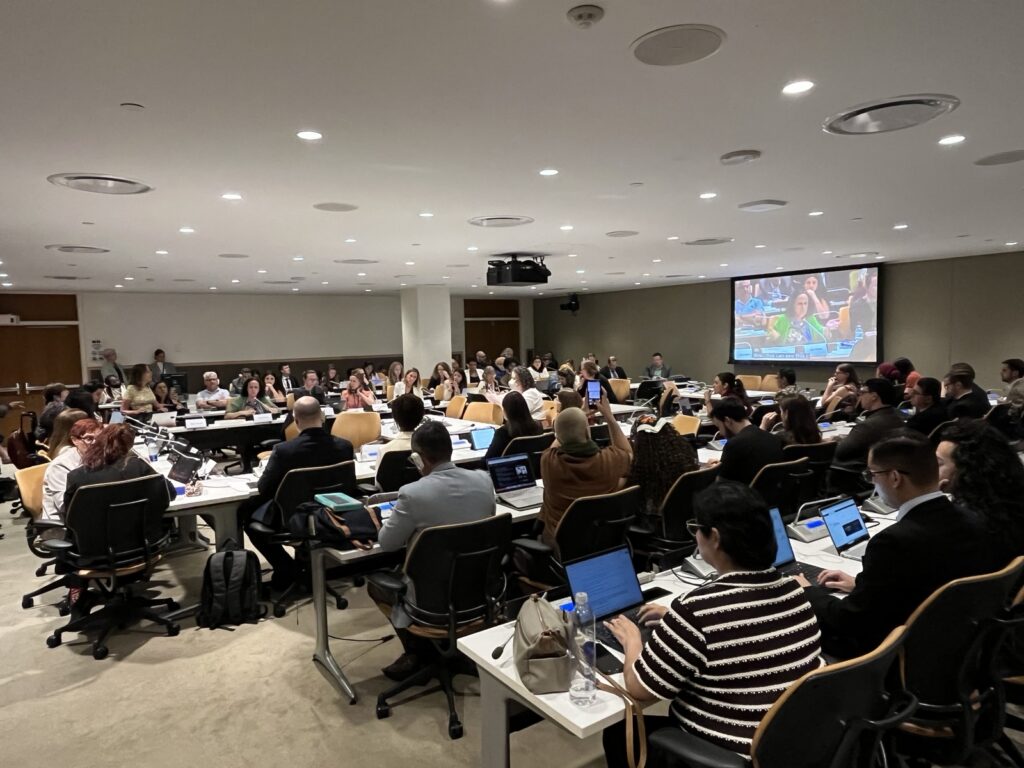
The Guidelines serve as an authoritative framework developed by the UN CRPD Committee to help States better prevent, monitor, and address intersectional discrimination.
Throughout years of UN CRPD country review processes, the Committee identified a persistent, critical gap: the specific rights of women with disabilities and the complex, intersectional discrimination they experience are rarely understood or adequately addressed by governments.
As the UN CRPD celebrates its 20th anniversary, these Guidelines were issued to bridge that gap—ensuring the convention is implemented to benefit all women, girls, and gender-diverse persons with disabilities across their lifespans.
Why Are These Guidelines a Game –Changer?
International documents rarely explicitly focus on the detailed, lived experiences and rights of women with disabilities. These Guidelines clearly name and elaborate on the systemic barriers’ women and gender-diverse persons with disabilities face daily across the globe, including:
- Sexual & Reproductive Health and Rights (SRHR): Addressing and preventing enforced sterilization, forced contraception, lack of accessible healthcare, restrictions on abortion, and lack of perinatal, menstrual, and menopause care.
- Gender-Based & Disability-Based Violence: Exposing institutional violence, digital/online abuse, and the widespread lack of support services for victims.
- Caregiving Recognition: Validating women with disabilities as active caregivers and mothers, rather than only recipients of care.
- Economic & Educational Exclusion: Highlighting barriers in the labor market, economic and exclusion from education during puberty.
- Crisis & Climate Response: Tackling compounded exclusion during environmental disasters, climate emergencies, and humanitarian relief efforts.
…just to name a few.
7 Key Breakthroughs in the Framing of the Guidelines
What makes this document uniquely transformative is its progressive, structural approach:
- Explicit Inclusion of Gender Diversity: The Guidelines explicitly encompass the rights of transgender, intersex, non-binary, and other gender-diverse persons with disabilities and ask for gender diversity – inclusive interpretation of all obligations described.
- Recognition of Historical Root Causes: The Committee explicitly addresses the legacy and ongoing impacts of colonialism and enslavement, establishing that States benefiting from these historical systems bear a particular responsibility to remedy their ongoing effects.
- An Open Catalogue of Diversity: The text recognizes that women with disabilities belong to multi-marginalized communities—including Indigenous, Black, Dalit, Adivasi, refugee, asylum-seeking, religious minority, and pastoralist groups or persons living in informal settings, among others —while leaving space for all intersecting identities.
- Structural & Preventive Approach: Moving beyond a strictly punitive, reactive model, the Guidelines demand the dismantling of systemic oppression (such as ableism, audism, racism, and patriarchy) through early intervention, education, and public policy reform.
- Decriminalization is also a disability issue: The guidelines recognize impacts of criminalization of abortion, homosexuality, gender identity and expression as well as restricting marriage or consensual relationships as an important intersectional disability rights issue.
- Holding digital platforms accountable: Call for international and regional cooperation on human rights-based regulation of digital platforms and artificial intelligence systems to address technology-facilitated violence, algorithmic bias and discrimination against women with disabilities.
- Accountability & Budgeting: The document emphasizes that rights cannot exist without resources—demanding a shift in public spending away from militarization and incarceration toward social inclusion and intersectional rights.
…and much more.
How Women Enabled International (WEI) Contributed to the Guidelines
At Women Enabled International (WEI), we worked closely with the UN CRPD Committee at every stage of development to ensure the Guidelines were grounded in the lived realities of multi-marginalized persons with disabilities.


Our efforts focused on 3 main goals:
-
Meaningful Movement Building & Consultations
- Engaging the Community: Hosted a global webinar in August 2025 with members of the UN CRPD Committee Working Group (drawing nearly 300 participants) and published accessible Q&A materials to guide public inputs.
- Co-Facilitating Consultations: Co-facilitated in-person UN CRPD consultations during CoSP (Conference of States Parties) in 2026, centering organizations led by women with disabilities, including deaf women, advocates from pastoralist communities, and racial justice leaders.
- Amplifying Self-Advocates: Partnered with Inclusion International to organize dedicated consultations with women with intellectual disabilities, ensuring accessible plain-language submissions were included in both review rounds.
-
Strategic Submissions & Expert Advocacy
- Joint Movement Submissions: In 2025, WEI convened a broad network of organizations—including Advocacy for Women with Disabilities Initiative–Nigeria, Asia Pacific Indigenous Women with Disabilities Network, Disabled Women in Africa, Disability Rights Fund, Diverse Empowerment Foundation, Humanity & Inclusion, National Indigenous Disabled Women Association-Nepal, Rising Flame, Sruti Disability Rights Centre-India, Transforming Communities for Inclusion, Triumph Mental Health Support, Validity Foundation-Mental Disability Advocacy Centre, Women Enabled International, Women Spaces Africa, Dr. Magda(lena) Szarota, Nelly Bassily, Pamela Molina and Clare Gibellini —to submit detailed recommendations on political participation, SRHR, and climate justice.
- Strengthening State Obligations: In 2026, we collated partner feedback from Vidas Negras com Deficiência Importam, Sruti Disability Rights Center, National Indigenous Disabled Women Association Nepal NIDWAN, Asia Pacific Indigenous Women With Disabilities Network, Center for Inclusive Policy (CIP), TRIUMPH Mental Health and Rising Flame to strengthen Chapter III of the draft, focusing on actionability, monitoring, and gender-responsive budgeting.
- Capacity Support: Directly supported partner organizations across Brazil, India, Uganda, Kenya, and Nepal to draft independent analysis addressing local intersections of caste, rural settings, indigenous rights, racial justice, and sexual and gender diversity.
-
Technical Advice & High-Level Engagement
- WEI was invited to serve on the technical expert group supporting the CRPD Committee with analyzing public contributions and refining the draft text.
- We co-organized side events at CoSP 18 and CoSP 19 alongside the CRPD Committee and the Permanent Missions of Uruguay, Costa Rica, Spain, and Brazil to build political momentum among state representatives.
How to Use the CRPD Guidelines in Your Advocacy
Although the Guidelines are non-binding, they offer an unprecedented international benchmark for advocacy and policy reform. Here is how different stakeholders can leverage them:
- Organizations of Persons with Disabilities (OPDs) & Feminist Collectives: Use this international document as leverage when lobbying local and national governments for policy changes, such as inclusive healthcare, legal capacity reform, and accessible gender-based violence support.
- State Actors & Focal Points: National ministries, human rights institutions, and CRPD coordination bodies can use the text as a practical roadmap to design, fund, and monitor non-discriminatory public programs.
- UN Reporting & Parallel Reviews: Reference specific obligations in the Guidelines when submitting shadow reports during CRPD State reviews to hold governments accountable on issues like climate emergency responses or reproductive rights.
The Path Ahead
The adoption of these Guidelines is a victory built on years of collective organizing by disabled women, gender-diverse advocates, and intersectional allies worldwide.
Now, the real work begins: turning these guidelines into lived realities.
Stay tuned to Women Enabled International as we release tools, policy breakdowns, and dissemination materials to help you put these Guidelines to work in your community!
👉 Read the official CRPD Guidelines here
Did you find this breakdown helpful?
Share this article to spread the word about the new UN CRPD Guidelines, or tag us on social media @womenenabled to let us know how your organization plans to use them!