Cookies are used throughout the Web. Eu legislation (GDPR) protects your right to manage what browsing information is stored and retrieved via cookies. Privacy is your right, and we respect that. We recommend the following cookies for a better experience. You are free to block them at your preference. Contact us for questions or concerns: Info@womenenabled.org
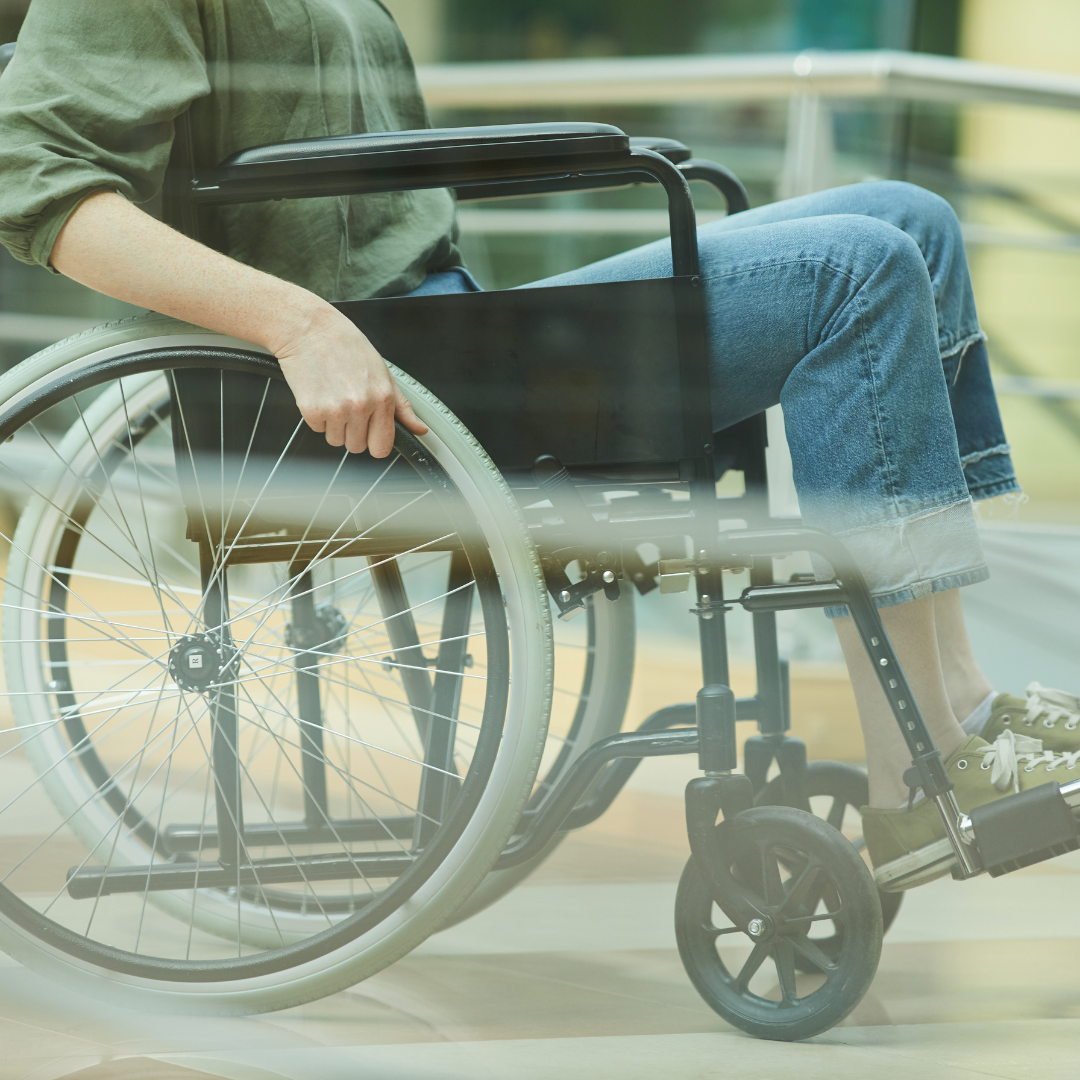
Picture of a person in a manual wheelchair. They are wearing a green shirt, blue jeans and green sneakers. Their face is not within the frame of the picture. Photo credit: Canva
“So, what do you do?” When I’m asked this question, I sometimes hesitate for a moment because the topic can be awkward: women’s health issues for women with physical disabilities. I work as a Research Area Specialist within the University of Michigan’s Physical Medicine and Rehabilitation Department. I’ll admit it: this is not the area I really wanted to work in when I started working there in 2014. Like many disabled women, I didn’t experience the same level of sex education as my peers without disabilities. I was born with a physical disability and while I wasn’t sheltered, I didn’t have the “typical teen dating experiences”. Even if I’d had the opportunity to have those experiences, my disability is severe so kissing or sexual activities would have required adjustments. For example, I have limited range of motion in my hips and knees so “traditional” positions for sexual intercourse would be difficult. Limited range of motion in my upper extremities’ as well as pain/fatigue make self-pleasure quite tiring. Therefore, when my supervisor first introduced the idea of working with her on studies related to gynecological and reproductive health I was nervous. I mean it’s only been within the last few years I’ve become comfortable talking about this with my closest friends. How was I going to talk to women I didn’t know about sex, periods, and pregnancy planning? While it was awkward at first, I soon realized the importance of this work.
What is U-M PROWHD?
My supervisor, Claire Kalpakjian, PhD, MS serves as the director of the University of Michigan Program for Research on Women’s Health and Disability (U-M PROWHD). In this program, we hope to reduce barriers and empower women with disabilities by conducting research and sharing the results with patients and health care providers. Through this work I’ve had the opportunity to read academic journal articles surrounding gynecological and reproductive healthcare for women with physical disabilities. I have coordinated and facilitated interviews/focus groups and reviewed our participants’ survey responses. I quickly realized that many women with physical disabilities often lack formal education about managing periods, sex and contraception options or healthy relationships. Parents/guardians, teachers, and — as they got older — health care providers often didn’t take the time to talk about periods or if they did it was from a medical perspective. For example, they addressed symptoms like cramps or discussed options for limiting or stopping periods altogether. What isn’t usually discussed is the practical side of having a period: how to place a pad on your underwear or insert a tampon if you have limited range of motion or strength. Sex or pregnancy planning is often also not discussed. This could be because it was assumed women with disabilities weren’t interested in having sexual experiences, because health care providers may have felt like they didn’t have the right kind of education or knowledge to talk about the risks or potential complications associated with pregnancy for a woman with cerebral palsy or a spinal cord injury, or even because at times women with physical disabilities (including myself) can feel awkward bringing up these topics.
Creating A Patient Reported Outcome Measure
In a study funded by the National Institutes of Health, U-M PROWHD is developing the first patient reported outcome measure (PROM) that is exclusively focused on the health of women with physical disabilities. A PROM is information collected directly from the person themselves about a health problem or other situation. These outcomes are being used more and more in healthcare in addition to evaluation by a healthcare provider to help physicians and other health care professionals understand the health-related quality of life of their female patients with physical disabilities. A PROM can be a short form or survey that you can fill out. In developing a PROM that focuses on women with physical disabilities, we hope to help women and their health care providers feel more comfortable discussing topics that can feel awkward to bring up.
In order to develop this PROM we needed to come up with a “conceptual framework.”
A conceptual framework is a representation of thoughts and ideas about a certain topic. Having this framework helps researchers better organize and understand complex topics. Working in collaboration with researchers from the Kessler Foundation and NYU Langone Health we talked with a total of 81 women. This was done through focus groups and individual interviews. Participants ranged in age, race/ethnicity, disability type and severity, and other characteristics. We learned that several things have affected their reproductive health care experiences including:
· Having a trusting and open relationship with their provider and/or partner
· The provider’s willingness to communicate about reproductive health topics
· Self-advocacy and self-identity as a woman with a disability
· Their own knowledge about reproductive health
· The physical health care environment
This information allowed us to create the initial version of the PROM. Moving forward we will be testing the items to see how well they work “in the real world”. Unfortunately, it will still be some time before this is able to become a standard part of clinical care, but we are anxiously working towards this goal.
Creating Pregnancy Decision-Making Guides
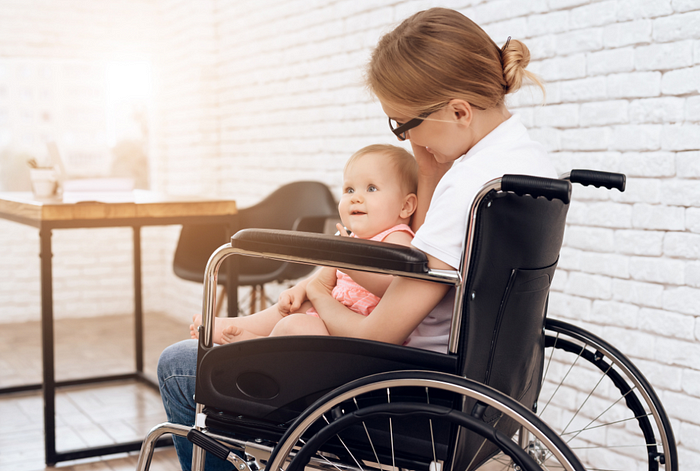
Picture of a woman in a wheelchair, holding a baby in her lap. Both are smiling. Photo credit: Canva.
Making a decision whether or not to get pregnant can be an exciting and scary time for anyone, but when a woman has a physical disability, these emotions are often more intense. Although women with disabilities want to be mothers as much as their peers without disabilities, they are much more likely to be uncertain about whether they will be able to. Women with disabilities often struggle to find good information about the risks of pregnancy or know the questions they need to ask and whom to ask. We are currently working on two pregnancy decision-making tools. One of the tools (for women with physical disabilities) helps women to feel more certain and ready to make a decision in pilot testing. Our next step is to test it in a bigger sample and if it works as we think it does, our plan is to get it out to the public so any woman can use it if she wants.
When people make important decisions about their health, decision making tools can be helpful to learn important information about the decision and how it might affect them. It can also help promote shared decision making. Shared decision-making means that the patient and the healthcare provider work together to decide the best course of action. The tools we are creating were designed by researchers and women with physical disabilities to help women think about different aspects of pregnancy and how these may affect their health and wellbeing. They are meant to help them make a decision that is right for them. They also contain worksheets that women can use to explore topics that are relevant for them.
Working on all of the studies I’ve described has helped me grow both professionally and personally. While learning the about the barriers women with physical disabilities have accessing gynecological and reproductive health care, I realized just how fortunate I am to have the provider I do. She actually leads a clinic specifically for girls and women with disabilities and in the spirit of full disclosure, she is involved with many of U-M PROWHD’s projects.
Many articles described physical and attitudinal barriers women can face when accessing care — this has not been an issue for me. Instead, it has been more my own lack of confidence or comfort discussing this area of my life that has limited me. Talking with women as part of their study screening and participation has helped me to develop confidence talking to people I don’t know which is such an important professional skill. Hearing about their experiences has also validated my personal experiences — it’s nice to know other women have difficulty with things like placing a pad. All in all, I think it’s important to normalize these types of conversations. I’d be lying though if I said I was totally confident and comfortable talking about this. In fact, I’m rather nervous about writing this article knowing that my family could potentially read this. But, through this work I have realized that it’s something that needs to be written and talked about.
About the author
Rebecca Parten, LMSW is 31 years old and works as a Research Area Specialist for the Department of Physical Medicine and Rehabilitation at Michigan Medicine. She has a Bachelor’s degree in Communications and a Masters’ degree in Social Work. After graduating with her MSW she obtained licensure through the state of Michigan as a Master’s level Macro social worker.
Born with a genetic neuromuscular condition called Escobar Syndrome, all of Rebecca’s joints have limited range of motion. She uses a power wheelchair for most of her mobility. She also has severe scoliosis which restricts her breathing so she uses a ventilator via a face mask when sleeping. As she entered her mid-twenties her pain and fatigue increased and are a major issue for her today. She has additional diagnoses such as Adrenal Insufficiency, vision loss and hearing loss. She is a proud Hufflepuff (Harry Potter house) and enjoys spending time with her family, friends and pets. You can connect with Rebecca via her website, Facebook , and Instagram.
Getting involved with U-M PROWHD
While the specific opportunities may vary at any given time U-M PROWHD is always looking for participants!
Complete our online study interest form and we’ll reach out to talk more about the current study opportunities. You can also call (734) 763–4645 or email prowhd-research@umich.edu. We hope to hear from you soon!
Two hands, Black and Brown, holding. One has rings and the fingernails painted in red and blue. The other one has a crafted bracelet in tones of brown, yellow and green.
Was she an aunty? A non-descript name we assigned to older looking ladies Was she a person with Down Syndrome? A designation we associated to someone with certain facial features
Was she just another unmarried woman? A stigmatized label we gave to women who chose a different route
Was she the nagging lady? A person we and her neighbors had learned to keep at distance
Was she the aunty with “problems”? A word even young children had learned to recognize, a word that meant she knew less so we needed to be kind.
Turns out she was Zaitun (alternate name used for confidentiality) An avid artist,
An expert in the art of Quilling,
Her paper-made flowers blossomed my class walls, sometimes the only décor we had
Her knowledge of colors surprised me in a way a plain person like me could never phantom.
She supported her single mum’s home-made business of selling Indian snacks,
Not a day went by when she saw my lunch and promised me her mum could make it much better.
She was my intel, I knew what went around every class,
She never skipped a beat to step in when a peer needed a hand.
She is a grieving daughter and sister,
We spent our time in the school playground,
Reliving the memories of her lost father, the one who believed in her
Reliving the memories of her lost sister, the one who disregarded her the least.
She spent her days dreaming about a future with her husband and kids,
I spent my school hours, playing detective, making sure no one would abuse her in the name of marriage.
I was too young in the world of advocacy and disability rights to understand that the right of marriage was of hers, too.
Long after I stopped being her teacher, she became my friend
The one I always made plans with, but they never happened,
The one whose calls made time fly fast,
The one who always wished the best to my family.
So maybe yes, and maybe no,
Yes, she is an aunty. That’s how older women are addressed in our culture.
She may be a person with Down Syndrome. Many people in Tanzania, like her, do not have the luxury of a diagnosis.
No, she is not the nagging lady, she holds just as much value, but didn’t give her a chance
Yes, she might be an aunty with problems, but after all who isn’t? Her challenges may differ, but to assume — and accept — that those challenges set her in a negative light is a problem we all must solve.
This is the story of Zaitun, who taught me, as a special educator, to challenge my narrow world view; who made me read articles upon articles on sexual rights and equality, who made me aware of the biases I held so strongly. She is the one who teaches me the importance of being a well-informed ally and advocate, and most of all, she is the friend who knows just the right time to call to comfort my incessant anxieties.
When imagining a world led by women, it’s likely that images of Michelle Obama or Malala Yousafzai will come to mind, as they are outstanding leaders who have reached great milestones and whose work is an inspiration to other girls and women worldwide. Even though I always looked for a direct affinity in public figures like them, I never found it.
I didn’t think this was due to a language, ideological or geographical barrier, and so my concern grew and I began to dig deeper, seeking to find the right answers to all the doubts I had about women’s leadership, which did not resemble my reality.
It was 2013 when I met Marissa Martinez, a woman and leader with a visual disability from Panama, who constantly shares powerful messages to other women with her same condition. Meeting and listening to her was something that would mark me forever.
When I met her, I was captivated by her energetic words, which instilled in me a sense of security in my own identity. As I listened to her, I understood that the affinity I was looking for in other women laid in my ability to not only feel pride in my identity, but also to instill it in other women as well, keeping in mind our particular situations, our diversity.
A picture of Estefanía Cubillos Nova with Marissa Martínez.
Today, years later, I can recognize that, without Marissa’s leading voice, I wouldn’t have taken a step forward to advocate for the rights to which we as women with disabilities are entitled, fighting from grassroot movements.
It is essential that girls with disabilities learn to accept and be proud of their condition from an early age. This is a vitally important factor that is not yet discussed at home, at school, the community.
In this context, we encounter many obstacles in advocating for our rights. From the comments made at home to the content present in the media, people with disabilities grow up surrounded by stigma and stereotypes associated with pity, imperfection and rejection.
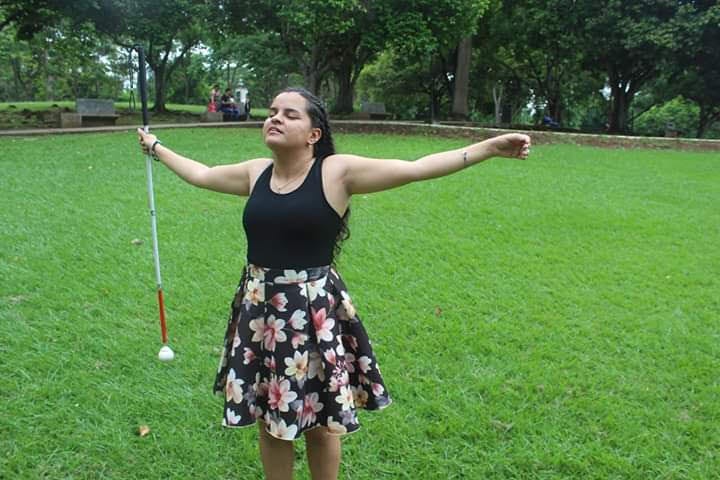
In my case, I remember the time when I did not use the white cane to move around for fear of being ignored at school, or when I avoided eating in public places to avoid being stared at. Years later, I was astonished to find that other blind friends of mine had experienced the same thing. In that moment, I knew that it was time to act and change everything from the ground up.
A picture of Estefanía Cubillos Nova with her arms open. She’s holding a white cane in her right hand. Credit: Gabriel Elliot.
Going back to Marissa’s story, I’d like to stress how fundamental it is to assume and embrace disability as a condition that is part of our existence, from a proud and optimistic perspective. As Marissa claims,“it doesn’t matter what our condition is. We have a duty to be proud to be women with disabilities; it is a right that no one can limit. It is also our duty to stop being ashamed or hiding the fact that we have difficulty seeing or hearing.”
The key to move forward and create new leadership is in our hands. We have to start instilling -in ourselves and other women with disabilities- the importance of feeling comfortable with ourselves and what we represent.
We don’t want to be cast under the grim light of charity and eternal infantilization any longer. We never agreed to that. It is time for us to raise our voices and take places of leadership, because when women with disabilities lead, communities thrive.
De izquierda a derecha: Luz Velandia, mujer usuaria de silla de ruedas con distrofia muscular; Constanza Pérez, mujer con discapacidad sistémica; Jazmín Rueda, mujer con discapacidad visual, y Catalina León, mujer sobreviviente de accidente cerebrovascular.
Soy una mente mal educada habitando un cuerpo no normativo, objeto de instrumentalización médica, definida como “mercancía dañada”. O como a mí me gusta decir: chueca, mujer, cisgénero, feminista, educadora en Colombia, que trabaja en el campo de la inclusión y la defensa de los derechos humanos de las personas con discapacidad.
Vengo del lugar donde las personas con discapacidad son queridas, pero no deseables. Me encuentro en uno de los lugares que nadie desea, pero sí se compadece. El dolor crónico. Observo a diario la forma indolente en que derechos tan elementales como nuestra privacidad son transgredidos en entornos incapacitantes y lastimeros que se han agudizado ahora con la crisis mundial por la pandemia de COVID-19, ocasionándonos un retroceso en términos de movilidad y autonomía.
Francamente, me estremece pensar en las mujeres en zonas rurales, anuladas física o emocionalmente, que están dedicadas al cuidado de sus opresores, las que duermen en el cuarto de atrás de su casa donde reposan los objetos que no sirven, las infantilizadas, cuya vergüenza de existir tatuada en sus cuerpos y mentes no les permite reconocerse como sujetas de derechos, abrazando la idea de la resignación.
Es por esto que busco plasmar nuestro sentipensar en clave de un “nada sobre nosotros sin nosotros”, y me niego a seguir pensando que el perímetro de acción de las mujeres con discapacidad es la cocina, o el cuidado de los niños ajenos, las citas médicas, las iglesias, o las actividades de ocio, mientras otras voces –muchas con privilegios de cuerpo y clase– hablan en nuestra representación ahí afuera. En ese orden de ideas, me permitiré mencionar algunas formas en que hemos sido agraviados histórica y actualmente.
La sociedad capacitista y adultocentrista nos ubica como protagonistas de un porno inspiracional misérico que promulga la resiliencia y la alegría como virtud inherente a la persona con discapacidad, bajo un constante “mírame, si yo puedo, cualquiera puede”. Por mucho tiempo hemos permitido que nuestras historias de vida sean exhibidas para que la gente ‘convencional’ logre compararse con nosotros y se sienta mejor consigo misma.
Hoy en nombre de las existencias errabundas y dolientes, les invito a ir más allá de un testimonio motivacional, asumiendo que también habitamos la vulnerabilidad, la melancolía, la desesperanza, el sufrimiento, la ira, el rechazo, la frustración, la impotencia de no pertenecer, y el cansancio por la vida misma. Somos cuerpos a los que la resistencia muchas veces se nos va recuperándonos, recolectando energía para vivir un día a la vez, si es que la ansiedad y depresión se van un rato a pasear y nos permitan vivir la tranquilidad.
La figura de familia biológica, representada férreamente por la iglesia como el conjunto ideal padre-madre-hijos, supuesta cuna de sujetos funcionales aptos para la vida independiente, productiva y proactiva nos genera sentimientos de inadecuación, puesto que, en la cotidianidad pululan progenitores que bien pueden ser figuras ausentes, o por lo contrario se convierten en sobreprotectores que no supieron cuidar o amar (se), cuyo trato condescendiente desde nuestras infancias nos ha llevado al autoodio y al perfeccionismo. Entonces, en función de la aparente familia ideal, aprendimos a exigirle a nuestro cuerpo-mente a no mostrar fragilidad para no ser una carga, nos hacemos acreedores de una deuda de aprobación imposible de pagar: Un auto-estigma lleno de miedo anticipado a la devaluación.
Estoy segura de que si construimos nuestra identidad individual y colectiva a partir del cuidado, la ternura radical, el amor propio y la interdependencia, podremos transgredir el lenguaje capacitista, y negarnos a competir desde la comparación con otras corporalidades, rescatando, en su lugar, la importancia de las redes de afecto y dando lugar a la apertura con el otro.
Fotografía del torso de una persona en silla de ruedas que está planchando una camiseta. Lleva puesta una camisa violeta y las uñas pintadas de distintos colores. Crédito: Canva
Nuestro autoconcepto es vulnerado cuando se determina por caprichos colectivos que nos categorizan a conveniencia: bien podemos pasar de ser angelicales, tiernos e inofensivos a ser agresivos resentidos, asexuados o hipersexuados, niños o adultos según corresponda; por mencionar un ejemplo: mujeres con discapacidad que trabajan formalmente son violentadas por sus padres invasores de su espacio, su privacidad, su tiempo, monitoreando sus relaciones interpersonales, sus preferencias, porque son niñas eternas. Curiosamente, estas niñas son las mismas que se encargan de cuidar el hijo de la familiar que sí se superó –procreando –, estas niñas son las que aportan dinero en casa y la mantienen en orden. Entonces, la niña desempeña labores de una mujer adulta…
Por su parte, el sistema colapsado de salud que tenemos no se queda atrás en vulnerar nuestra dignidad, optando por abordar nuestros desajustes emocionales con medidas de medicalización o institucionalización deshumanizante, en algunos centros de salud, para acceder a una consulta nos exigen estar acompañados de un ‘acudiente’ para que hable por nosotros, lo cual nos cohíbe al expresar nuestro malestar. También, en los servicios de salud mental, los profesionales suelen revictimizarnos con moralismos de tipo “Perdónale. Nadie le enseñó a ser madre o padre”, dejando el maltrato que nos han infringido en la impunidad, ya que aún no hay leyes suficientes que castiguen el maltrato psicológico y tampoco hay educación emocional que nos ayude a identificar dichas prácticas de abuso.
A pesar de este panorama, reconozco que gracias al esfuerzo de miles de activistas a nivel mundial, hemos avanzado. En algunas instituciones ya representamos la cuota de diversidad, lo grotesco, lo inferior, lo raro, o en el mejor de los casos: lo exótico. Aún así, lo cierto es que estamos diseñados para incomodar a un mundo observador y hostil; y estoy segura de que si construimos nuestra identidad individual y colectiva a partir del cuidado, la ternura radical, el amor propio y la interdependencia, podremos transgredir el lenguaje capacitista, y negarnos a competir desde la comparación con otras corporalidades, rescatando, en su lugar, la importancia de las redes de afecto y dando lugar a la apertura con el otro.
Desde mi rol como mujer disidente, apuesto a un empoderamiento mutuo que nos permita ir del auto-estigma a la auto-estima genuina. Sueño con habitar espacios contracapacitistas donde las voces que se pronuncien sean las nuestras, donde la disidencia no sea tragedia y podamos sentir el respaldo de ese pariente (no necesariamente consanguíneo), cuya complicidad respetuosa logre reparar en cierto modo la deuda histórica que la sociedad tiene con los cuerpos enfermos, dolientes, impredecibles y sensibles. Si logramos reescribir otras simbologías que no nos definan en criterios de productividad o cuerdismo, podremos entender que seguir existiendo es un acto político, y que nuestro cuerpo debe ser territorio incolonizable.
Photo. Against a yellow background, there is a picture of a microphone, that at the same time, is placed against an aqua green and pink background. Credit: Canva
A primary focus of women in the disability rights movement is to understand the different forms of discrimination encountered at the intersection of two minority identities. Like in other regions around the world, women with disabilities in Latin America are talking more about our experiences and pushing back against the ableism and misogyny that doubly discriminates against us.
The situation is nonetheless complex. It’s not enough to add up the obstacles experienced by people with disabilities and women. It’s not enough to add up the demands of the disability rights and women’s movements. While this is all very valid, it goes beyond a single identity to their intersection; to the lived experiences of prejudice and discrimination that only women with disabilities encounter and deeply understand. They are many and ongoing, from situations as routine as doctor’s visits to more dire incidences of reporting gender-based violence.
How can doctors, police, educators and so on adequately and fully serve and care for women with disabilities if laws and policies are written without us in mind? And how can inclusive laws and policies be written if the people writing them don’t reach out to or represent us?
Institutions set up to serve us frequently fail to meet our needs on multiple fronts not least of all accessibility- be it lacking sign language interpretation, large print versions of documents, building access and so on- and therefore fail to protect and provide us with the services afforded to women without disabilities. It’s in these moments that our intersectionality and invisibility is most apparent and saliently felt.
Social institutions’ standard of service and care are based on an ableist model of personhood. Disability simply doesn’t factor into the equation let alone its intersectionality with other minority identities. Lack of disability representation among public officials- the politicians and policy-makers who make decisions on our behalf- is a part of the problem that plagues most societies, including in Latin America. How can doctors, police, educators and so on adequately and fully serve and care for women with disabilities if laws and policies are written without us in mind? And how can inclusive laws and policies be written if the people writing them don’t reach out to or represent us?
As women with disabilities, the responsibility falls on us time and again to do the work of systemic and structural change. While we need to be aware of and vocal about the intersectionality of disability and gender discrimination, it’s the State’s duty to build capacity in areas of need and serve the public even when it’s not quick, easy or convenient. Our inclusion isn’t other people’s discrimination. Nonetheless, a resistance to meeting our needs is overt and rooted in discourses of scarcity. Lacking the economic resources to make social-structural and institutional changes is a favorite argument of States around the world, and it’s one that often wins out. As a result, we’re sidelined and silenced [rendered invisible] by those who, again, are meant to care for and serve us.
Invisibility is challenged by speaking up; by representing ourselves [our intersectionality] and not being represented by people who don’t share or care about our experiences. When we speak up, we empower our community to do the same. An empowered community is one that fights for the full exercise and expansion of its rights. In Latin America, we see this happening as women and other marginalized groups with disabilities are becoming increasingly restless, reaching out to one another and organizing. Collectively empowered, we’re pushing back against State-led prejudice and discrimination through multiple means and with this comes the message that we won’t be silenced or sidelined anymore.
About the author:
Luciana Sosa was born in Uruguay. She is 26 and is a high school student. She is a passionate activist for human rights and is a member of Red META (movimiento estamos tod@s en acción) since June, 2017.
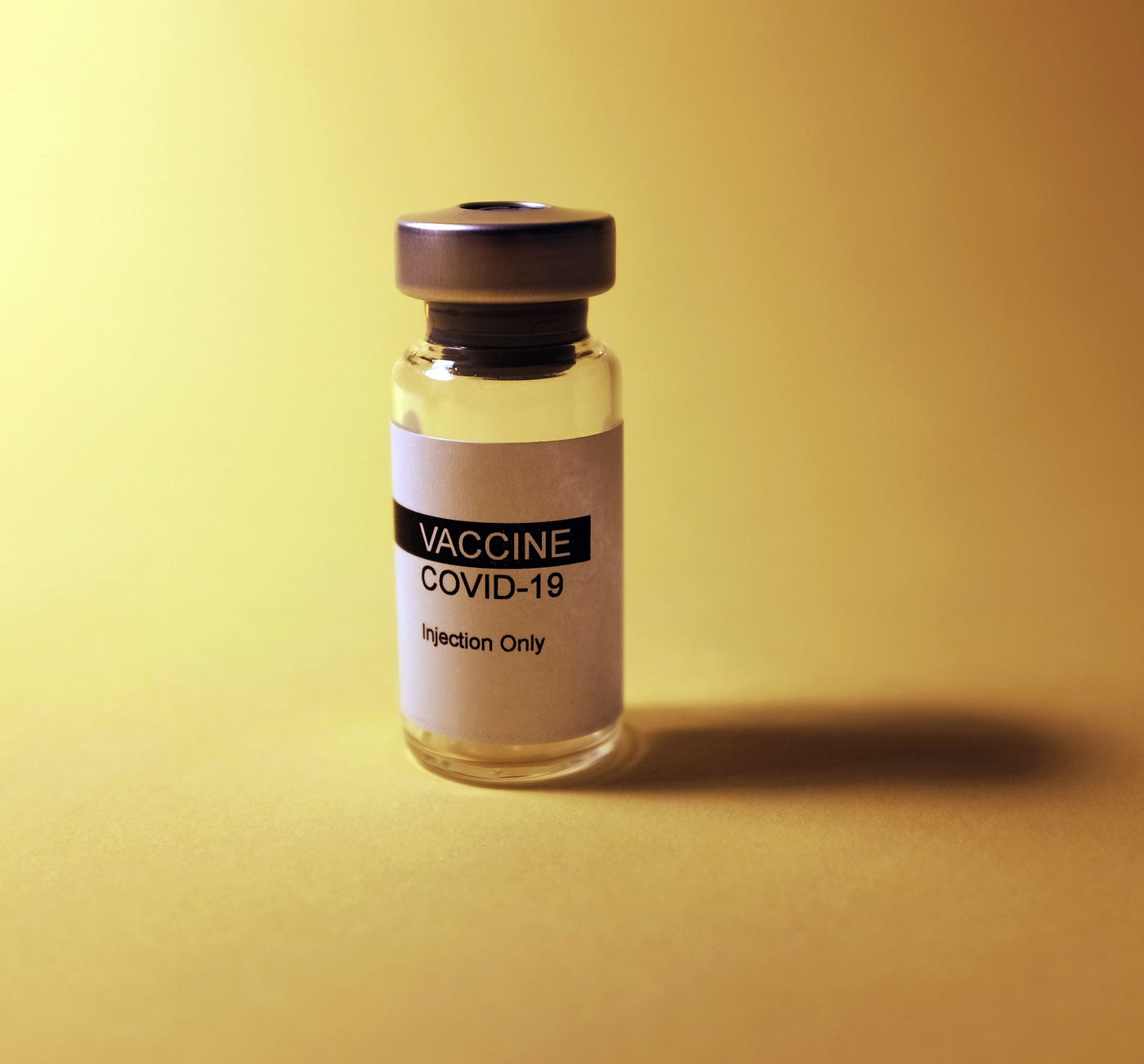
Picture of a COVID-19 vaccine bottle against a yellow background. Photo credit: Hakan Nural via Unsplash
India has been coping with an overwhelmingly alarming second wave of the COVID-19 virus. The situation remains very distressing for citizens and frontline workers alike. Overburdened with patients, the healthcare system has collapsed. Many hospitals ran out of oxygen and critical drugs, as well as available beds.
PWD are disproportionately impacted by coronavirus and those with specific disabilities or chronic conditions are more vulnerable. WWD have been hit harder owing to the intersecting forms of discrimination they face. A global human rights survey conducted by Women Enabled International in March 2020 revealed that COVID-19 related lockdowns and measures led to gaps in access to health care facilities and support, access to food and hygiene items, increased risk of violence, loss of employment and exacerbated prevailing lack of social protection for WWD. Local reports noted similar issues with respect to WWD in India. Despite this, data collection in India on COVID-19 cases is not disaggregated by disability. One would’ve hoped that given the gendered and intersecting impact of COVID-19 on WWD, the government would reflect it in data collection and prioritized them in vaccination policies.
Persons with disabilities account for 2.21% of the population in India (26.8 million among 1.2 billion persons) with women with disabilities making up 1.9% of the female population.
COVID-19 Vaccination Program in India
India is only the second country in the world to have administered 200 million doses of COVID vaccines. The vaccination program began in January 2021 with healthcare workers and was soon expanded to include frontline workers the following month. In March, persons aged 60+ years and those 45+ years with 20 specific co-morbidities, became eligible. This was followed by opening eligibility to those aged 45+ years by April and, finally, those between 18–44 years became eligible as of May.
To avail any of the three vaccines now available in India, one must mandatorily register on either of the two online government portals/phone applications — COWIN and Aarogya Setu. Both require a mobile number to register and log in. Every log-in prompts a One Time Password (OTP) sent to the registered number to access the portal. An identification document (ID) is required for registration. Vaccination slots can be scheduled for up to four persons linked to one mobile number. Upon clicking on Schedule Appointment, the portal shows the available slots at both public and private vaccination centers, the vaccine type available and its price. Searches can be filtered by using PIN codes or district-names in each state.
Barriers to vaccine access
Photo of a red brick wall. Photo credit: Michael Dziedzic via Unsplash.
India is a deeply patriarchal country. Patriarchal attitudes impact each aspect of the lives of women, including access to healthcare and vaccination. WWD are doubly impacted given their intersecting identities. Dalit WWD and those who are undocumented or located in rural areas may face further hurdles to vaccine access. The requirement to show a proof of ID to register on the COWIN platform may exclude WWD who might be undocumented or otherwise not have documentation for various reasons. Though the government has issued guidelines for vaccination without ID, they appear to be left to the discretion of local authorities. Dalit WWD may further be excluded due to caste-based discrimination and stigma, very much prevalent in India today. Other issues — such as the low literacy rates among WWD in India — further exacerbate the situation.
Women with disabilities are doubly impacted given their intersecting identities. Dalit women with disabilities and those who are undocumented or located in rural areas may face further hurdles to vaccine access.
Access to vaccines is further complicated by the fact that the government has abandoned its previous practice of centrally procuring all vaccines from manufacturers and securing their distribution to persons through the state free of charge. As a result, state governments are required to negotiate prices and procure vaccines from manufacturers individually. This has led to differential pricing across India and impacted vaccine access, particularly for WWD, who have experienced increased financial precarity during the pandemic, and who may not have independent access to sources of money or their finances.
WWD have among the lowest rates of mobile and smartphone ownership, with a gender and disability gap of 37% in India. They face exclusion from the very start of the process as COWIN and Arogya Setu require steady internet connections. Moreover, these platforms are not particularly screen-reader friendly, thus impacting access for women with sight-related disabilities. Vaccination slots for individuals aged 18–44 years get booked within seconds, which yet again excludes WWD who may not be able to respond to the platform instantaneously. The platforms are only available in Hindi and English, which further excludes linguistic and cultural minorities. Individuals aren’t required to fill out disability or co-morbidity related information, thus preventing collection of disaggregated data. The COWIN website doesn’t currently reflect data disaggregated by gender, let alone disability.
Photo of a person in a wheelchair. They have long brown hair and are wearing a teal midi dress. Photo credit: Canva
Additionally, there is a lack of accessible and reliable information to decide on vaccination. Rural areas are seeing a lot of vaccine hesitancy for this reason. For WWD, this means that if their family members are hesitant about getting the vaccine, they may be dissuaded from getting it as well — an issue further compounded by the lack of legal capacity rights and inability to decide on vaccination for themselves.
WWD in institutions may not have any choice in terms of vaccination due a lack of legal capacity rights. They may also be hesitant to get vaccinated due to negative experiences they may have had with the health care system, such forced sterilizations and medical treatments without their consent.
Many vaccination centers are also not physically accessible. WWD who do not own independent means of transport or require transport-related support, may be constrained to depend on family members, particularly male members of the family to take them to the centers. Disability rights activists have thus called for vaccination of PWD in their homes or at separate centers. Though certain states like Odisha are offering this to PWD, preliminary information received from the ground level in Bengal and Odisha reveals that there is a shortage of vaccines, particularly in rural areas.
In a telephonic conversation, Dr. Nandini Ghosh, associated with the Women With Disabilities India Network (WWDIN), informed me that high transport fees further alienate WWD from the vaccination program, as they are more likely to experience income and livelihood setbacks. She further added that there is a patriarchal discourse around vaccination, which prioritizes the vaccination of men with disabilities over WWD, who have low status in the family hierarchy.
Following advocacy from disability rights organizations and activists, the government is making efforts to provide for PWD, with directions recently issued for home vaccination or separate centers to be set up for PWD and walk-in registrations for vaccination. Whether these directions are implemented properly remains to be seen.
The Way Forward
There has been a lot of globalattention to the issue of vaccination access for PWD. However, WWD have not specifically been accounted for. In India, there has not been an intersectional approach to the barriers that WWD face, or to how they may be addressed by the government and civil society. Addressing them will encourage a more equitable vaccination process and will go a long way in controlling the spread of the pandemic and preventing COVID-19- related deaths. To do this, WWD must be prioritized for vaccination and their informed consent be sought; accessible information regarding vaccination must be ensured; and care must be taken to ensure that WWD have transport support available free of cost or at subsidized rates to travel to and from the vaccination center, in case home vaccination is not possible. Lastly, WWD must be encouraged and provided with a support of their choosing to decide on the specific vaccine they would like to get.
Photo by Sergey Katyshkin from Pexels showing a face mostly obscured by vibrant airbrushed colors of pinks, purples, oranges and blues.
At six year’s old my mom found me walking around my bedroom talking out loud to seemingly no one. I don’t remember what I was saying, but I remember my mom telling me it was like I was somewhere else entirely, talking to the air, like characters in a movie in which I was playing a part. She thought it was a weird phase, or a hallmark of an over-imaginative child, but it never went away. When I was sixteen, I was officially diagnosed with attention deficit hyperactivity disorder (ADHD), a surprisingly young age compared to most women who are diagnosed with ADHD well into adulthood. I knew that I always had trouble focusing and that my intense daydreams weren’t anything out of the ordinary. Yet, it wasn’t until I was on Tik Tok this year (of all places) that I realized my daydreaming had a name, Maladaptive Daydreaming (MD), and that this thing that allowed me to escape from reality was actually a mental disorder.
Healthline.com describes MD as a psychiatric disorder, where intense daydreaming distracts from personal life. MD can be triggered at any time by conversations, sensory stimuli, and physical experiences and it has its own setting, plotlines, and characters. A person with MD can be talking to themselves out loud and making facial expressions for minutes to hours at a time. According to the British Psychological Society, people with MD spend about an average of four hours a day dreaming.
MD is an immersive experience where one can feel transported to a different world without ever physically leaving reality. When I am in a maladaptive daydream I am completely shut off from the world. While MDing, I experience loss of focus and sleep, heightened anxiety and an inability to distinguish where I am or what I was doing prior. I can also lose track of time and work tasks can suffer; I might unexpectedly talk to myself in public, forget who I’m talking to, and sometimes forget who I am. At times, I have become deeply depressed and anxious from daydreams that were extremely intense and even traumatic. On more than one occasion, I was so deep into a daydream that I developed a panic attack.
Photo by Sergey Katyshkin from Pexels showing a face against a black background mostly obscured by airbrushed colors of red, orange, green and yellow.
I never realized that my daydreams were a hindrance and a symptom of a disability like ADHD. However, as much as MD has caused me to disassociate from the world, I can’t imagine my life without it. I recognize that it disrupts my life, but I don’t know who I would be without it. So much of what I’ve been through and who I am is reflected in my daydreams.
Research from the University of Haifa in Israel and La Trobe University in Melbourne, Australia found that females with MD often experience psychosocial problems from experiences of child sexual abuse. The study, conducted with 194 participants -half of whom were survivors of child sexual abuse and the other were control recipients with no history of abuse- found that survivors scored higher on MD compared to the control group. Survivors with higher MD scores compared to other survivors experienced higher psychological distress and social phobia.
MD is a way to shut of the outside world and intensify your own inner world. It has exacerbated my anxieties and even caused me to relive some of my traumas. But as much as MD is painful, in my experience it has also been a relief. As a woman with MD, I know I’ve unintentionally used it as a protective barrier from a patriarchal and sexist society. For instance, when I’m in MD while walking down the street, I don’t hear the catcalls and gross comments about my body, because the men making the comments aren’t players in the world that I’m creating. My daydreams can be violent and painful, but they can also be a delightful distraction from the outside world.
When we think of ADHD we think of hyperactive boys, that can’t sit still, disrupting classrooms. I want to broaden this picture to include girls, when we think of ADHD and MD, creating adventures and reliving pain. I want us to see them using MD to bring inner comfort to themselves.
MD has its consequences, especially as a woman. In general, MD and ADHD make it difficult to organize, focus on, or pay attention to details in life. Culturally speaking, women are supposed to be the household organizers; the ones that know everything in everyone’s lives and have the family schedule memorized; the type-a glue that keeps it all together. Women with ADHD sit in direct contrast to this and what the patriarchy expects of women, broadly. The difference between men and women with ADHD is that men have the luxury and social permission to be disorganized. Men aren’t pressured to manage family life. Young girls are taught and conditioned to be family planners and household organizers by enforced gender norms and culture; think, for instance, of dolls and toy kitchen sets. Studies have shown that both men and women with ADHD experience societal consequences, but differently. For men, these consequences tend to play out in the workplace, while women may experience conflicts in the home, not being able to meet socialized gender expectations. Boys and men can be the daydreamers, visionaries, and a chaotic mess of ideas, while girls and women are expected to be on the sidelines- staid, organized and focused.
MD is a common symptom of ADHD, even though not everyone who has ADHD experiences it. MD is a haven and a hindrance, just like ADHD is both a burst of energy and a distraction in life. Every mental illness has its costs and benefits and most mental illnesses are culturally associated with a certain person or type of person. When we think of ADHD we think of hyperactive boys, that can’t sit still, disrupting classrooms. I want to broaden this picture to include girls, when we think of ADHD and Maladaptive Daydreaming, creating adventures and reliving pain. I want us to see them using MD to bring inner comfort to themselves. Women and girls with ADHD and MD are not ditzy or have our ‘heads in the clouds,’ but rather reflect on our own world and dreams within ourselves.
Julieta Barbiero is an Argentina-born-Texas-raised writer and upcoming graduate student for public health. Along with researching mental health and intersectional feminism, she is obsessed with plants and reading fantasy novels.
Black and white photo by Kevin Escate on Unsplash of two arms, each with small tattoos and finger nails painted, reaching for one another.
The traditional post-partum body narrative is something we are well versed in; your body changes and neither you nor your partner or anyone else will like it as much as your pre-pregnancy body. This narrative applies to all body transitions: growing from younger to older; transitioning from one gender presentation to another, and becoming disabled.
As I stood in the bathroom of the maternity ward having given birth a few days earlier, in a rare and frightening moment of privacy, I dared to look down and take in my post-partum body. I’ve never heard of a pregnant person’s body returning to “normal” post-birth. Yet there I was in the mirror, my socially acceptable size 10, stretch mark free self. But the veneer, the externality of supposed health and acceptability wasn’t representative of what was going on inside my body. I suffered a (missed) third degree tear and was now completely faecally incontinent, meaning I had a split-second warning and zero control.
Two weeks after giving birth, my body was the same as it was pre-pregnancy, and yet completely different. I now had a section of my large intestine sitting flush on my belly over which was stuck a bag to collect my shit.
The first reaction I encountered to my colostomy bag was from continence nurses in the National Health Service (NHS). I was initially pleasantly surprised when they wanted to talk to me about my sex life, but soon realized they only wanted to know if I could have penis in vagina sex and if I would even want sex at all. It was a shock (and weirdly amusing) to be advised by the NHS to wear sexy underwear and learn that the hernia belt I now required was available as lace covered. The interaction was both ableist and heteronormative.
Beyond the confines of the NHS, reactions to colostomy bags can be much less controlled and much more visceral. I think those who are convinced that ostomates (those of us who use colostomy bags) can’t possibly have sex lives imagine a soap opera scene of a would-be lover who takes one look at the bag-ladened body and instantly rejects it in disgust.
Black and white photo by Ricardo Gómez Angel via Unsplash. Two hands touching each other with the tips of the fingers.
The reality is nothing like that; it’s far more mundane. After the stress of planning my supplies, I head to work knowing I’ll have to continuously check myself throughout the day. This means accessing different disabled toilets, possibly dealing with leaks, definitely audibly farting in at least one person’s presence at the bus stop and maybe even in front of all my colleagues at a board meeting. At some point, I’ll glance at the socials and see some ableist vitriolic crap and return home. It’s a drain on my mental energy, and the shame and anger that come with it do nothing for my sexual mood.
What’s lost cannot be replaced, but what has emerged is a different mode of being.
For such a long time, the loss of mine and my partner’s previous relationship was hardest for me to deal with. I grieved for it. The loss of our intimate rituals that were for us and us alone. The loss of how we would jokingly hotwire our connection and chemistry at the end of a work day by running toward one another, whipping up our shirts, and shouting in unison “belly love” before falling into a more serious embrace. The loss of feeling my partner’s tongue run from bony hip to bony hip across my pot belly, unimpeded by the bag. The loss of feeling my tummy brush over my partner’s bare ass as my tongue makes its way down her body.
What’s lost cannot be replaced, but what has emerged is a different mode of being. Two women, one who is now disabled, with a new body, rediscovering sex together. It’s a big fuck you to people who think sex without a cock isn’t real sex and sex with an ostomate can’t be desirable. It’s subversive and subversive is sexy.
I once read that the hottest sex happens when one is at their most vulnerable. When I lay there fully naked, looking down to see my partner kissing my tummy, her head millimeters from my bag, I am definitely at my most vulnerable.
What about my partner? Well she’s always been unsentimental and blunt. True to character, she simply feels that it doesn’t change anything for her and that’s that.
Still, my body has changed and we have changed with it and it’s not a poor imitation of my pre-pregnancy self.
Rachel Cooper is a queer woman, punk, and disability activist. She works for a nonprofit operating within the social model of disability, and has stepped up her raging against the machine following permanent birth injuries.
Picture of a girl in a school inform. Her hair is braided and she is looking intensely into the camera. In the background, there are five other children. Credit: Raj Rana via Unspalsh.
Last week I signed up for a new Disability Studies course in Delhi because I’m so passionate about learning new things, going to classes, thinking about everything critically and getting an education. But also, I would get to know so many disabled teachers and students from across India, something that I’ve craved since childhood. But alas, in academia and research, even Disability and Gender Studies, cis-het white/Savarna abled people’s feelings and views continue to hold the most value.
I always had a difficult time in schools, not just socially but also academically. It’s always been a struggle to score well; most of the time I end up failing or dropping out. As a disabled kid, this was more difficult because everyone expected that my mind would compensate for my disabled body. There’s a media trope where disabled bodies serve as inspiration porn, so that we can be more palatable for abled audiences. It applies to all kinds of socio-politically marginalized groups and is tied to respectability and iconicism.
Every time crips enter an educational institution, we are asking for a new way of teaching, learning and accessing knowledge. We are challenging the entire institutionalized system of education.
I’ve internalized these failures so much that I often felt it was the reason why no one wanted to be my friend. Every time I enter a new institution, I have so much hope of encountering new people, new experiences and new pedagogy. Maybe I don’t try hard enough or I become too critical, and therefore, it turns out to be the same old set up: competition, acquiring degrees, calculating success, and most of all…segregation. Where can I find the sad, lonely, angry, rejected queers and crips?
Every time crips enter an educational institution, we are asking for a new way of teaching, learning and accessing knowledge. We are challenging the entire institutionalized system of education. We’re fighting against a century old tradition of obtaining degrees. However, mainstream society has always been so afraid of change that they choose to segregate “normal” education from “special education” [for the crips] or they’ll separate our schools entirely. This extends to all other areas of our lives: building entrances, classrooms, bathrooms, transportation, the way people choose to have relationships with us; it’s all separated. So many abled people who call me a friend only hangout with me away from the rest of their abled friend groups.
A picture of Shivangi. She is sitting on the floor, leaning back on her left hand.
In the current political climate of India, age old Hindu traditions and systems that are casteist, transphobic, sexist and ableist are suddenly what the nation state is all about. If anyone questions them or seeks to change them, or simply exists outside of them, then they’re imprisoned or killed. I guess that’s where all the sad, lonely, angry, rejected queers and crips wind up- locked up in institutions, hidden away, closeted, shut down, disguised and concealed from sharing their authenticity.
Although, bear in mind, that’s not where we remain. No matter how much we are denied opportunities and violently separated from mainstream societies, we have retained and preserved the knowledge from all our queer elders fighting for their rights from institutional prisons. Our crip ancestors who’ve left us so much information about the inevitability of revolution, how we can have a wild imagination about Disability Justice that university theories can’t even begin to make sense of. We don’t need Disability Studies from the perspective of old white academics and ancient degrees. We’re fashioning small communities in our bedrooms and taking our sweet time to process and appreciate the slow nature in which we move to challenge a fast-paced capitalist society. We are surviving and thriving!
Shivangi (@DisabledSpice) is a disabled and queer activist and graffiti artist from Delhi. She works as a consultant, researcher, policy advisor, and facilitator with an emphasis on advocacy for disability, gender, sexuality and accessibility.
Por Estefanía Cubillos Nova. First published on Medium.
Al imaginarnos un mundo liderado por mujeres es probable que pensemos en Michelle Obama o Malala Yousafzai, por ser destacadas lideresas que han alcanzado grandes hitos y cuyo trabajo es motivo de inspiración para otras niñas o mujeres a nivel mundial. No obstante, yo siempre busqué una afinidad directa en esas figuras públicas, y nunca la encontré.
No creí que se tratara de una barrera idiomática, ideológica o geográfica. Mi inquietud crecía, y fue así que empecé a investigar, buscando encontrar las respuestas adecuadas a todas las dudas que tenía sobre los liderazgos de las mujeres, que no se asemejaban a mi realidad.
Transcurría el año 2013, cuando conocí a Marissa Martínez, procedente de Panamá, una mujer líder y con discapacidad visual, que constantemente comparte poderosos mensajes de lucha a otras compañeras en su misma condición. Conocerla y escucharla fue algo que me marcó para siempre.
Cuando la conocí me cautivaron sus enérgicas palabras, que me infundieron un sentido de seguridad en mi propia identidad. Al escucharla, comprendí que aquella afinidad que buscaba estaba en mi capacidad no solo de sentir orgullo de mi identidad, si no de infundirlo también a otras compañeras, sin olvidar lo que implican las situaciones particulares y diversas de cada una de nosotras.
Una foto de Estefanía Cubillos Nova Junto a Marissa Martínez.
Hoy, años más tarde, me permito reconocer que, sin la voz fuerte y bien encaminada de Marissa, jamás hubiese dado un paso adelante para luchar desde los movimientos asociativos y exigir los derechos que a todas las mujeres con discapacidad nos corresponden.
Es indispensable que las niñas con discapacidad,aprendan a aceptarse y estar orgullosas de su condición desde temprano. Este es un factor de vital importancia que aún no se discute en el hogar, la escuela, ni en la comunidad.
En este contexto, encontramos muchos obstáculos para generar una verdadera incidencia en pro de las mujeres con discapacidad. Desde los comentarios que se hacen en nuestros hogares hasta el contenido que se genera en los medios de comunicación, las personas con discapacidad crecemos, desde la infancia, rodeadas de estigmas asociados a la lástima, la imperfección y el rechazo.
En mi caso, recuerdo el tiempo en que no utilizaba el bastón blanco para desplazarme por temor a ser ignorada en el colegio, o cuando evitaba comer en lugares públicos para que las miradas de la gente no se concentraran en mí. Con gran asombro pude constatar años más tarde que otras amigas ciegas vivieron lo mismo. Entonces, tuve la certeza de que era el momento de actuar y modificar todo de raíz.
Una foto de Estefanía Cubillos Nova con los brazos abiertos. Con la mano derecha, sostiene un bastón blanco. Fotografía proporcionada por Gabriel Elliot.
Volviendo al relato de Marissa Martínez, rescato cuán fundamental es asumir y apropiarnos de la discapacidad como una condición que forma parte de nuestra existencia, desde una perspectiva orgullosa y optimista.
Tal como ella lo afirma, “no importa cuál sea nuestra condición. Nosotras tenemos el deber de sentirnos orgullosas por ser mujeres con discapacidad, es un derecho que nadie puede limitar. Nuestras virtudes y potencialidades no tienen por qué reducirse al liderar y disfrutar del mundo. También nos corresponde dejar de avergonzarnos o esconder que tenemos dificultad para ver u oír”.
La fórmula para avanzar y crear nuevos liderazgos está en nuestras manos. Tenemos que empezar a inculcar la importancia de sentirnos a gusto con nosotras mismas y con lo que representamos.
Ya no queremos que se nos proyecte bajo la nefasta perspectiva de caridad e infantilización eterna. Nunca estuvimos dispuestas a ello. Es hora de que alcemos nuestras voces y ocupemos lugares de liderazgo, porque cuando las mujeres con discapacidad lideramos, las comunidades prosperan.
Sobre la autora:
Estefanía Cubillos es periodista, disfruta viajar y es egresada del Instituto Sobre Liderazgo y Discapacidad 2019 (WILD) impartido por MIUSA.