By Alice Wong. First published on DisabilityVisibility.
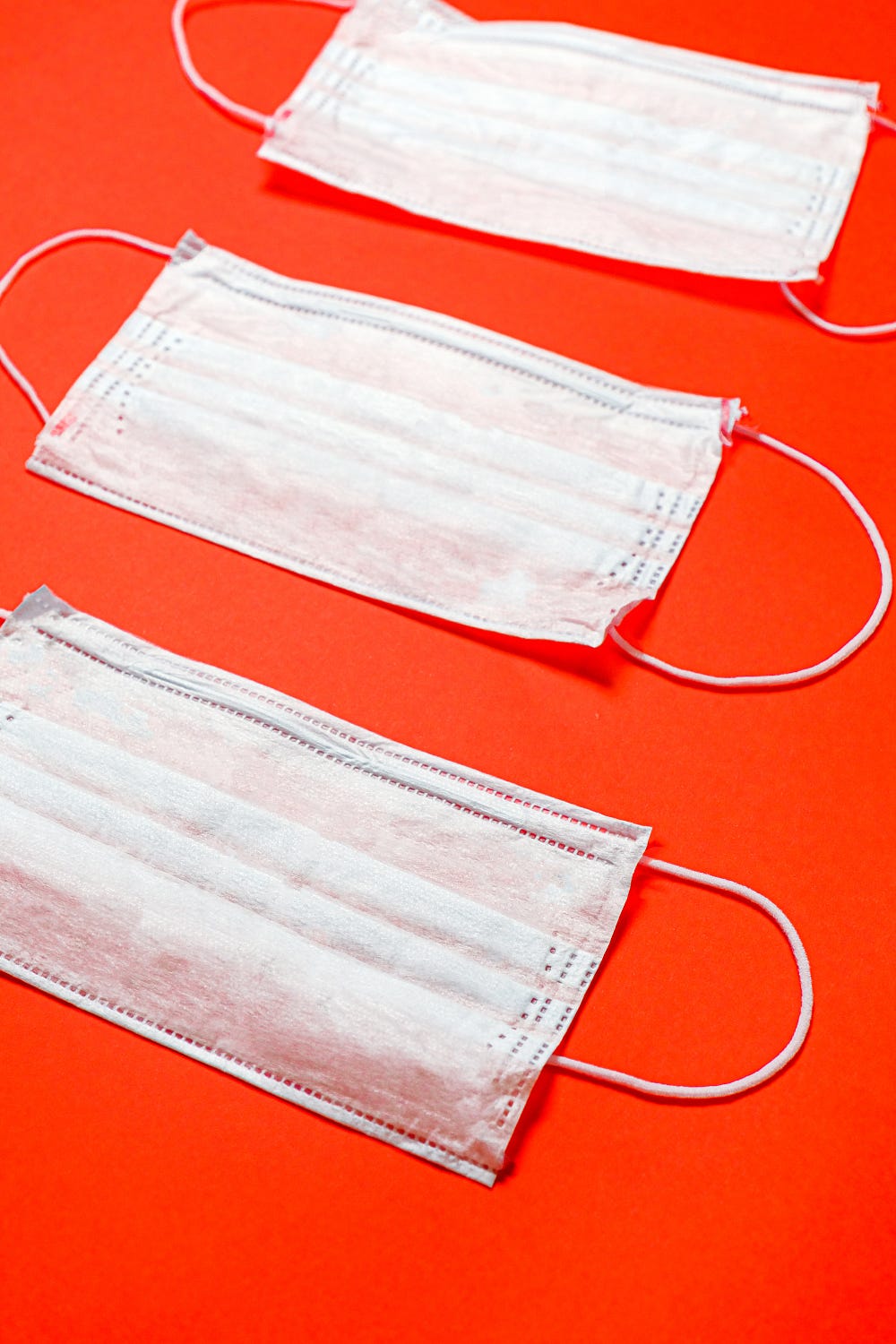
Photo of three white surgical face masks against a red background
Photo of three white surgical face masks against a red background by by Anna Shvets from Pexels.

Freedom for some is not freedom for all. As a high-risk disabled Californian staying at home in San Francisco, I am not jealous that people are enjoying bars, beaches, and parks. I am angry seeing so many people outdoors not wearing masks or social distancing. As various cities and states begin to ease their shelter-in-place restrictions, I fear for the millions who will be left behind.

The public is incredibly eager to get back to “normal” as thousands of people continue to die in congregant settings and institutions such as nursing homes, detention centers, prisons, shelters, and psychiatric, residential, and other long-term care facilities, out of sight, out of mind. I am perplexed by the lack of urgency in response to people trapped in institutions and congregate settings who face maximum risks with minimal protections. Many are my disabled kin⁠ — they are part of the disability community segregated and isolated in the name of “safety” and “care.”

One of the first widely-publicized COVID-19 outbreaks happened at a nursing home in Kirkland, WA, with 142 cases and 35 deaths from February to March. As of June 4, over 43,725 people in long-term care facilities died from COVID-19 in 40 states, with New York reporting the highest number: 6,237 according to the Kaiser Family Foundation. All of these numbers come with names, faces, and families, not just body bags. What number will be high enough for people to care? This is a complete political and moral failure.

The federal government is considering rolling back infection control requirements in nursing homes, which prevent or stop the spread of infections with procedures such as having standard practices on hygiene and handling equipment. A 2017 analysis of nursing home data by the Kaiser Family Foundation reported at least 40 percent of the nursing homes had at least one infection control deficiency that year.

At least 18 states have laws or governor’s orders that protect nursing homes from lawsuits and/or criminal prosecution related to the pandemic. New York and New Jersey so far are the only two states to provide immunity to corporate officials from the nursing home industry from civil lawsuits and some forms of criminal prosecution. Governor Gavin Newsom received a request in April from a group of hospital and assisted living lobbyists for a sweeping Executive Order granting broad immunity from civil and criminal liability objected by advocates from the disability community.

Governors need to launch investigations into outbreaks at all congregate settings, mandate reporting of infections and deaths, enact universal testing for all workers and residents, provide adequate personal protective equipment, increase wages and protections for workers, and deny the nursing home industry the legal immunity it is demanding. In a May 6, 2020 video featuring the late Stacey Park Milbern, a disabled activist and a founder of the Disability Justice Culture Club, she warned:

There has to be checks and balances on hospitals and nursing homes. Otherwise, disabled people, especially people of color, are left alone in a system that already doesn’t care about us.

Congregant settings do not ensure safety or care. By design, institutions do not allow us to know about the conditions of the people incarcerated inside. They are allowed to operate without transparency and accountability. They render people as less than human, subject to exploitation, abuse, and neglect.

_______________________________________________________

About the Author

“Alice Wong (she/her) is a disabled activist, media maker, and consultant. She is the Founder and Director of the Disability Visibility Project, a community partnership with StoryCorps and an online community dedicated to creating, sharing and amplifying disability media and culture created in 2014. Alice’s areas of interest are popular culture, media, politics, disability representation, Medicaid policies and programs, storytelling, social media, and activism. She has been published in the New York Times, Vox, PEN America, Catalyst, Syndicate Network, Uncanny Magazine, Curbed SF, Eater, Bitch Media, Teen Vogue, Transom, Making Contact Radio, and Rooted in Rights. Currently, Alice is the editor of Disability Visibility: First-Person Stories from the Twenty-First Century, an anthology of essays by disabled people, available now by Vintage Books (2020).”

Bio excerpted from The Disability Visibility Project where you can find more information about Alice’s work here.

You can follow The Disability Visibility Project on Twitter @SFdirewolf @DisVisibility and Instagram @disability_visibility


Aurora Berger

Photographer

“Working within the frameworks of capacity and disability, I use photographs to examine and reclaim my own identity.”
– Aurora Berger


Aurora Berger is an award-winning photographer with visual and physical disabilities based in rural Vermont, USA. As a visually impaired artist, Aurora not only uses the camera as an extension of her perspective, but also as a weapon against ableism, and as a way to reclaim her identity.

Aurora’s artistic process, collections, and self-portraits confront the medical model of disability and internalized ableist constructs of disability, worth, and beauty. Recently, she was honored by The John F. Kennedy Center for the Preforming Arts with an Award of Excellence as part of the VSA Emerging Young Artists Program.

“My work is about existing in the body that I have, in the life that I am living. It is about inhabiting spaces, perceiving surroundings, and above all, the process of survival.” – Aurora Berger

To learn more and support Aurora’s work, visit her website (http://www.auroraberger.com) and follow her on Instagram and Twitter at @AuroraBerger. 


If you identify as a woman, non-binary, or gender non-conforming persons with disabilities whose livelihood is affected by COVID19 and want your work to be featured on our social media platforms, please fill out the linked interest form. 

COVID-19, sometimes called the coronavirus, has impacted the health and safety of communities around the world. We at Women Enabled International believe it is having a particular impact on women, girls, non-binary, and gender non-conforming persons with disabilities, including on their economic livelihoods.

This month, we’re highlighting the work of women, non-binary, and gender non-conforming persons with disabilities who are economically impacted by COVID-19 on our social media platforms.

Small business owners, artists, speakers, musicians, entrepreneurs, authors, web-designers, freelancers, and others are encouraged to submit their contact and business information through the linked interest form.

If you identify as a woman, non-binary, or gender non-conforming persons with disabilities whose livelihood is affected by COVID-19 and want your work to be featured on our social media platforms, please fill out the linked interest form. A member of our staff will reach out if we plan to highlight your work.

Please share among your networks.


WEI is a human rights non-governmental organization working to advance rights at the intersection of gender and disability, particularly as related to women and girls with disabilities. If you have any questions, please contact Brittany Evans, WEI Program Assistant, at b.evans@womenenabled.org.

In my work as an advocate for greater awareness of the global burden of diarrheal disease and the tools that can help solve it, I’m struck by how illness is so often a proxy for inequitable access to basic needs. There’s even a term for it: “diseases of poverty.” Diarrhea is rarely a killer in places like the United States, but is the second leading infectious killer of children in places where access to healthcare and clean water and sanitation are poor. Access to the most basic tools is the deciding factor between living and dying.

As usual, women bear the brunt of this crisis and on multiple fronts, particularly when it comes to the consequences of unsafe drinking water and sanitation. Women spend many hours a day collecting water for their families that may not even be safe to drink, and a lack of toilets exposes them to the danger of sexual assault when they seek privacy under the cover of darkness. The long-term effects of repeated enteric infections – malnutrition and stunting – follow girls throughout their lives as they become malnourished mothers that give birth to underweight babies. The cycle is multigenerational.

“As usual, women bear the brunt of this crisis and on multiple fronts, particularly when it comes to the consequences of unsafe drinking water and sanitation.”

It stands to reason that women and girls with disabilities fare even worse. Unless their voices are heard, toilets that do come to the community will lack the necessary accommodations to improve their quality of life, and we will fall short of the equitable access aspirations set by the Sustainable Development Goals and the Declaration on Universal Health Coverage.

Encouragingly, the rights of people with disabilities are gaining momentum. The theme of last year’s World Water Week was “leaving no one behind.” Many sessions reinforced the importance of designing sanitation programs with populations facing increased barriers in mind, as this is much more economical and streamlined than retrofitting facilities after they’ve been built. WaterAid has several great examples of how they have woven inclusive approaches into their programs. They start with a local landscaping of the opportunities and challenges of people with disabilities, tailoring solutions to a community’s needs.

Advocacy at all levels has made these conversations possible. Visibility has real-world implications; those who are invisible are less likely to be included in data that guide policy decisions and program implementation, and this is what makes the work of WEI so essential. Only where women and girls with disabilities are seen can we bridge the gap of access to the most basic of human needs, and the most basic of human rights. ♦


About the author Hope Randall is a Digital Communications Officer at PATH, a global team of innovators working to eliminate health inequities so people, communities, and economies can thrive. Learn about PATH’s Defeat Diarrheal Disease Initiative at www.DefeatDD.org.

This week marks the 40th anniversary of the U.N. Convention on the Elimination of All Forms of Discrimination against Women (CEDAW). This human rights treaty, to which almost every country has signed on, has helped transform the world by providing a legal framework to ensure the respect, protection, and fulfillment of the rights of all women and girls, including women and girls with disabilities.

But for much of that 40 years, women and girls with disabilities have been left off of the women’s rights agenda in almost every country. The CEDAW Committee—the expert group that monitors CEDAW around the world—has long recognized the unique discrimination women with disabilities experience and has called on States to include women with disabilities in their gender equality efforts and to collect data on this group (to “measure what we treasure”).

We at WEI have seen, however, that women with disabilities are almost always invisible in the laws, policies, programs, and data collection efforts that those States put in place to ensure the rights of both women and persons with disabilities.

Earlier this year, I attended the CEDAW Committee’s periodic view of the United Kingdom and saw firsthand how States invisibilize disabled women. We worked with Sisters of Frida, a U.K.-based collective of disabled women, to report on continuing abuses against disabled women in the U.K., including gender-based violence, lack of access to employment and social benefits, and violations of sexual and reproductive rights. Sisters of Frida and I traveled to Geneva, Switzerland, to witness the CEDAW review, and when the CEDAW Committee repeatedly asked the U.K. government about the situation of disabled women, it was clear the U.K. representatives had no clue. They instead cited statistics on women and disabled persons more broadly and had little to no information on the specific situation of disabled women.

This was demoralizing, as the U.K. government clearly did not “treasure” disabled women. But it was also affirming, because our concerns were being recognized and promoted by the world’s leading experts on women’s rights, who are holding countries like the U.K. to account. I’m not sure women with disabilities would have been so robustly included in the women’s rights agenda 40 years ago.

There is hope that the next 40 years of CEDAW will bring about profound and positive changes in the lives of women with disabilities, as the world is increasingly recognizing the need to ensure the rights of women in all of our diversity.

Indeed, in 2018, the first disabled woman—Ana Pelaez Narvaez of Spain—was elected to serve as an expert on the CEDAW Committee and is already having an impact on the Committee’s work holding States accountable for ensuring the rights of all women and girls, including women and girls with disabilities. Her presence on the Committee is showing States that they cannot ignore women with disabilities, and it is also starting to show women with disabilities that their voices and contributions are valued in women’s rights spaces. ♦


About the author Amanda McRae is the Director of U.N. Advocacy at Women Enabled International, where she represents WEI at the U.N. in New York and Geneva and develops strategies to advance the rights of women with disabilities through U.N. human rights mechanisms and other institutions. She previously served as a researcher at Human Rights Watch focusing on Europe and Central Asia and disability rights worldwide, and a global advocacy adviser at the Center for Reproductive Rights.

A Word of Welcome

Welcome to the Women Enabled International Blog – Rewriting the Narrative with WEI! This is a new space we are launching to showcase the voices, opinions, and stories of women with disabilities and allies championing the rights of women and girls with disabilities worldwide. We hope that you will find the posts here both informative and thought-provoking.

Much of Women Enabled International’s work involves legal language and complicated international human rights procedures. It is my hope that Rewriting the Narrative can be inviting for both experts and those less familiar with the issues to learn about our work and the work of our colleagues from around the world in the fight to bridge the gap between the disability rights and the gender rights fields.

The beginnings of Women Enabled International can be traced back to 2010. For many years, I worked in international women’s rights spaces and sometimes in disability rights spaces. In both, I found that disabled women were generally absent and ignored.  Something had to be done, and voila thus began Women Enabled International! We are the first international organization dedicated to advancing human rights at the intersection of gender and disability.

Since then, WEI has grown into a close-knit team with staff, board members, fellows, and interns from all over the globe. At least half of us have a disability ourselves or a family member with a disability; the other half are dedicated allies. What brings us all together – no matter from what continent or time zone we may be working – is our shared passion for disability justice, gender justice, and the radical potential of complete intersectional inclusion.

On Rewriting the Narrative, you will find posts by WEI staff, colleagues and advocates under the “Blog Posts” tab and updates on WEI’s work under the “WEI News” tab. We invite you to consider contributing to this blog and sharing your work and voice. If you would like to submit a blog post proposal, please complete the following form: Submit to Rewriting the Narrative.

Let us join together to rewrite the tired, incorrect, and pervasive narratives about women and girls with disabilities worldwide.

Yours in global sisterhood,

Stephanie


About the author Stephanie Ortoleva, the Founder and President of Women Enabled International, is a highly recognized international human rights lawyer, policy and development consultant, author and researcher on issues of women’s rights, disability rights and the rights of women and girls with disabilities. As a woman with a disability herself, she brings the development, academic and legal perspectives to her work as well as her personal experience as a woman with a disability.