Cookies are used throughout the Web. Eu legislation (GDPR) protects your right to manage what browsing information is stored and retrieved via cookies. Privacy is your right, and we respect that. We recommend the following cookies for a better experience. You are free to block them at your preference. Contact us for questions or concerns: Info@womenenabled.org
Women Enabled International partnered with 8 organizations of persons with disabilities. The result is My Body, (but not) My Choice: Legal Capacity Violations Against Women with Intellectual or Psychosocial Disabilities and Recommendations for Action, a 2-year global research project in collaboration with over 100 women with intellectual or psychosocial disabilities.
This document shares the findings of the Disability and Abortion Access Survey (survey). Disability Rights Education and Defense Fund (DREDF) and Women Enabled International (WEI) developed the survey to better understand the experiences of people with disabilities who have sought or received abortion care in the United States.
With the spotlight on: resilience, innovation, and impact, Women, girls, and gender-diverse people are continuing to forge new paths for disability justice and building movements in service of our collective liberation. Read more about Women Enabled International’s greatest wins of 2024.
This fact sheet offers concrete recommendations for providers to break down barriers and meet the needs of disabled clients, promoting good practices regardless of changes in federal legal requirements. Created in partnership with the Kering Foundation.
Women Enabled International’s new strategic plan has a bold vision for an intersectional future—one where the future of gender equality is inclusive, and the future of disability rights is feminist.
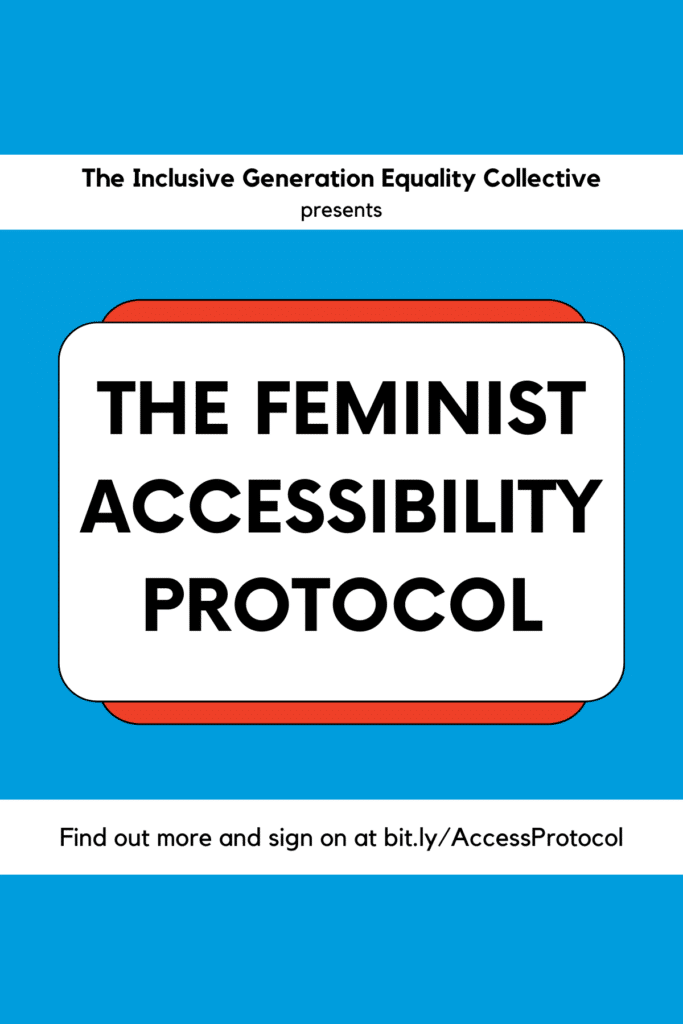
This is a groundbreaking set of commitments that seek to ensure the inclusion of feminists with disabilities in gender equality spaces. Created in partnership with the Inclusive Generation Equality Collective.
This interactive report identifies the key challenges disability rights activists experience in their work, as well as recommendationsfor funders who are interested in supporting the work at the intersection of gender and disability.
In collaboration with Urgent Action Fund for Feminist Activism.
This guide explores barriers to gender inclusion in disability rights spaces. The document outlines good practices and recommendations for overcoming these barriers
Identifies the primary concerns of the disability rights andreproductive rights movements, analyzes the human rightsstandards that underpin this debate, and applies an intersectional human rights-based approach for a way forward.
This is a curriculum for an in-person workshop directed at organizations of persons with disabilities. It was designed to provideinformation and experiential learning for women and young persons with disabilities, to deepen their expertise on sexual and reproductive health and rights, and the right to be free from gender-based violence.
This resource is a summary of the program’s methodology and key achievements, as well as lessons learned to increase knowledge andexpand accessto sexual and reproductive health services for women and young people with and without disabilities in Fiji.


 Lessons from the Disability and Abortion Access Survey
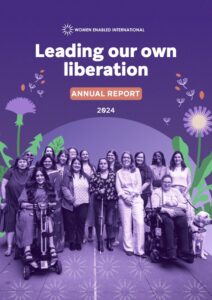 Leading our own liberation: WEI’s 2024 Annual Report



 Activists From Strength: What You Need to Know to Be a Disability and Gender-Inclusive Funder
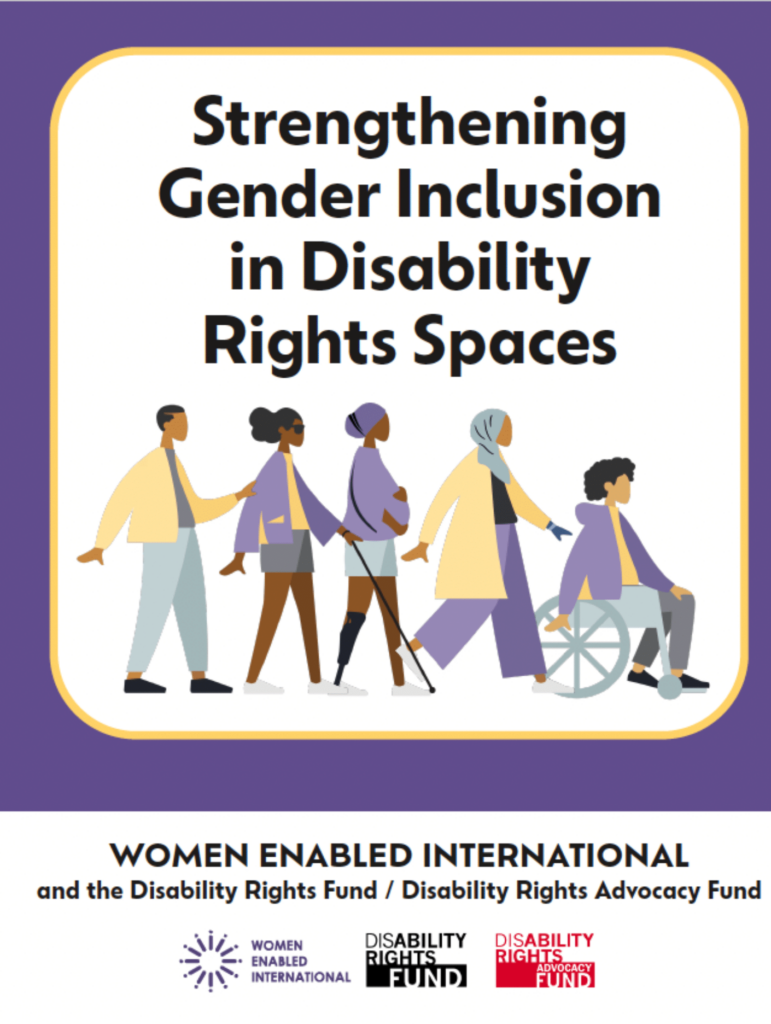 Strengthening Gender Inclusion in Disability Rights Spaces